Showing posts with label striated swallow. Show all posts

Monday, September 12, 2016

The Road Less Birded

It had been quite a while since I last saw postings of bird pictures taken from Mt. Palay-palay. That seemed strange because this place is one of the birding spots close to MetroManila. Perhaps these days birders were being drawn to the "more productive" sites such as Subic, IRRI, and recently, Bangkong Kahoy Valley.

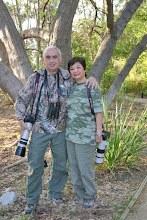
When friends Peter and Wenxing suggested that we try Mt. Palay-palay on Saturday, I hastily agreed. This is basically roadside birding stretching from Ternate going up to the Caylabne Resort. We've had good experiences here before so we hoped that we would be seeing multitudes of bird species. Thus began our trip to the road less birded.

Our first encounter was the endemic Philippine Falconet - one of the world's smallest raptors. Lots of them! At one point there were 7 birds perched in a single tree! A bit far but who's complaining.


After the falconets, birds were as scarce as snowflakes in the Sahara. We just saw one (!) Luzon Hornbill and even failed to take a photo because it was too high in a tree and didn't even stay long for a photo-op! The Brahminy Kites were there alright but they were soaring so high up. 


On our way back I was lucky enough to photograph one perched on a tree across the road.


The only other birds of note were the swallows/woodswallows.


Pacific Swallow
White-breasted Woodswallow
While Peter and Wenxing were "kiting" (taking pictures of the Brahminy Kites) a small flock of Striated Swallows perched on the electric wire above where Cynthia and I were taking refuge from the scorching sun. The swallows were taking turns flying off then returning to their perches. My wife and I thought this would be a good opportunity to practice our BIF (birds in flight) shots. Once again, I was outshot by my better half and thereby living up to that description.


We got photos of the Coppersmith Barbet, the Coleto and the Stripe-headed Rhabdornis. However, the shots were only of "documentary" quality because these birds were all perched at quite a distance from us.

As we prepared to go home, I took some photos of the Long-tailed Macaques roaming the area. Somehow the look on the face of one of them reflected the mood we were in.


Leaving Mt. Palay-palay it became clear to me why this 17 kilometer stretch had become the road less birded.

Monday, November 16, 2015

Shoes to Blame

With the recent spate of birding bad luck still haunting me, I was a little worried about our upcoming trip to Mt. Palay-palay in Cavite. More so because we will have our new friend from the U.S., Zach DuFran, joining us. Since this will be Zach's first time to bird in the Philippines, I was afraid that my misfortunes would continue to plague us and thus deprive our American friend of seeing a lot of local birds.

As we drove towards our destination, Peter (who was driving), my wife, Cynthia, and I were amused because Zach was so excited at seeing even the most common birds such as Yellow-vented Bulbuls, Striated Grassbirds and Cattle Egrets. And yes, he wanted to take photos of those.

Near the gate of Puerto Azul, Peter parked his vehicle and we locals unloaded our cameras while Zach was in high heavens photographing the cooperative Brown Shrike. Now armed and ready, we got back into the car and began the ascent. It wasn't long after that we saw a male Luzon Hornbill! Unfortunately, it flew off before we could take photos. We parked once again and waited, hoping it would reappear - but it didn't. It's still probably my bad luck I thought to myself woefully. 

Then there was some commotion in the nearby trees. "Yellow-vented Bulbuls," I half murmured. But somehow I had an urge to look at them through my camera. "Stripe-headed Rhabdornises!" I exclaimed. (Note the plural). 


Next came our first encounter of another endemic, the Philippine Falconet, perched on a wire.


As expected a Brahminy Kite soon came soaring overhead. Then the kite started harassing another raptor. An Oriental Honey Buzzard flew by totally ignoring the bullying of the smaller Brahminy. We were so surprised by the appearance of the Honey Buzzard that I only got a silhouette.

Eventually we saw the Luzon Hornbill again, this time the female, but it was too far off for a satisfactory shot. A small flock of Pygmy Flowerpeckers foraged on a tree not too far away but they were so active and preferred the inside of the foliage that once again we failed to obtain any respectable picture. While my companions were still looking at the distant hornbill, I noticed another raptor flying overhead. It was smaller and had a different color from the usual Brahminy Kites. I blame my excitement for the blurred photos but at least they were good enough for me to identify it as a Grey-faced Buzzard.

It was also while we were waiting for better views of the Hornbill that Cynthia and I noticed a bird behind the electrical post. 


"It's a woodpecker!" my wife said. I slowly crossed the road so I could get a better view but, as my luck (the bad one) would have it, all I saw was a flash of bright red that zipped from the pole to a tall tree where it instantly became invisible. There were a couple more red flashes after that but that's all there was to it.

Frustrated by the uncooperative Hornbill (not to mention the Luzon Flameback), we continued on our way. I saw something and asked Peter to stop and do a reverse. There, perched on a bare branch was another Philippine Falconet. We all got out of the car, took pictures to our heart's content, and was even given a bonus when another Falconet, presumably its mate, joined the other one.


Next sightings along the way were a White-breasted Wood Swallow and more than thirty Striated Swallows all perched on the electric wire.


White-breasted Woodswallow
Striated Swallow - one of about 30 on the wire
We parked by the gate of the Caylabne Resort. Perhaps half an hour passed and not even the resident Brahminy Kites showed up. With nothing much to photograph, we decided to take a group picture. Luckily, an ice cream vendor was around so we politely asked him the favor of taking the group shot. 


To show our gratitude we bought some chocolate crunch popsicle from him. We were finishing the refreshing ice cream when I saw a bird flying swiftly and then landed on the tall communication tower behind the Resort's gate. 

"I'm pretty convinced that is a Peregrine Falcon," I told my skeptical friends. It was Cynthia's sharp eyes that confirmed that I was not just imagining things. Unfortunately, the raptor stayed at the back side of the tower not allowing for any good photographic shots. Until it decided to fly off. Again, it was my wife that provided photographic confirmation of my identifying skills.


Inasmuch as all of us got good looks and photos of the Peregrine and an apparent turn-around from our heretofore not too good luck in getting images of the birds we saw, we all agreed that it's time to continue with our journey. I was already seated in the car when I saw a bird alight on a branch of the tree across from me. "Philippine Bulbul!" I announced to my companions. "No, wait! Blue Rock Thrush! Blue Rock Thrush!" I couldn't control my excitement. I really did not expect to see this species in this kind of environment since it usually prefers the concrete ledges of buildings.


After the Thrush left, we were all smiling at the bonus that we were just given. That is until I saw another raptor thermalling above us. It was huge, bigger than the Brahminy. It soared slowly, sometimes even stopping in mid-air, allowing us such unusual photographic opportunities. It was only during our lunch at Puerto Azul that we were able to confirm its identity: a juvenile White-bellied Sea Eagle. A lifer for all us.


Everything was anti-climactic after that. It was almost noon, the weather had become unbearably hot, so it was time for lunch. The only species added to our list were the Pacific Swallow and Asian Glossy Starling.

As we endured the terrible traffic on the way back to Zach's hotel, many things came to my mind. First, we were so glad that Zach was not disappointed even for just half-a-day's birding. My initial fears, thankfully, never materialized. Then, of course, was the obvious change in my birding luck. Cynthia said it's because we bought popsicles from the ice-cream vendor. Maybe that's true, since kindness and generosity has its rewards. Personally I think it's my shoes. Allow me to explain: I had been using my Columbia hiking shoes whenever we go birding until a few months ago. That was when the upper right section of the sole of the right shoe became loose. So I retired the Columbias and in its place I used a new pair that we bought in the U.S. (Realtree brand). Call it coincidence but since I started using that new pair of shoes I did not do well in my birding trips (please read my previous blogs). Last week, using an epoxy, I fixed my old Columbia shoe and that was what I wore when we went to Palay-palay. Let the bird sightings we had there provide the proof to my claim. Need I say more?


Monday, May 19, 2014

A Positive Few of the Situation

Birding in summer in the Philippines is really not a good idea. Still the three of us, my wife and I with our friend, Peter, hoped that our utter disregard for the weather would be justly rewarded.

Unfortunately, it was a bitter disappointment on our first stop. The area around the TREES Hostel was completely devoid of birds! The dead tree by the parking lot where we saw Falconets, Barbets, Rhabornis and even Balicassiaos before was as lifeless as can be. We silently blamed the throng of people who were preparing for an eco-run a few meters away for this.

The Dairy Park, thankfully, was more promising. We first saw a flock of Crested Mynas riding the backs of the grazing cattle. As we approached to get photos of the black birds, the whole herd decided to avoid the now blazing sun and moved to the shady part at the opposite side of the fence - far away from where we were standing. We couldn't blame the cows for wanting some relief from the heat, so while we were fuming at this latest setback I saw some swallows alighting near a puddle. We moved closer - under some shade, of course - and waited for the birds to do their thing. Once they have gotten accustomed to our presence, both Pacific and Striated Swallows came and pecked at the mud. I have seen this phenomena before and I thought these birds were using the mud to build their nests. However, in this case, there were no tall trees nor buildings nearby where the said nests are usually built. Besides, the same individuals would dip their beaks in the mud, fly off, circle back and repeat the routine. Could it be that this was their way of refreshing themselves to alleviate the rising temperatures?


Pacific Swallow
Striated Swallow
During one those times when the swallows would fly off, some Scaly-breasted Munias dropped by a nearby tree for a pause that refreshes.


From the Dairy Park we went to the Agripark where we anticipated seeing Pratincoles, Rails or even Snipes. Again, nada. Not a single bird! The same misfortune happened at the APEC area. The tall grass had been cut down so Buttonquails were nowhere to be seen. No Cisticolas either! Thankfully, some Crested Mynas were flying by and a few perched on the electric wires to take a breather.


We all agreed to try the Botanic Garden. Enduring the climb (Peter and I were carrying our big lenses) in the suffocating heat was a challenge. Only the hope of seeing some birds spurred us on. The lipote tree was no longer flowering so no birds can be found there. What was surprising was that the heliconias and torch gingers were in full bloom, but not a single sunbird appeared. At ten o'clock and still not even a shadow of a bird showed up so we decided to call it a day - with heavy hearts. In one of our many stops to catch our breaths, I spotted some movement on a banana-like plant. I thought at first that it was "just" a female Olive-backed Sunbird. Since we were starved for a bird photograph, we fired away. Looking at the results, I was now convinced that it was a female Purple-throated Sunbird!


It wasn't long that my suspicion had been confirmed when the brightly colored male showed up. Redemption at last! 


I believe that it was the first time that we have encountered such scarcity of birds in our outings. The sizzling summer heat made a negative impact on the avian population - even in an elevated place like Mt. Makiling. However, seeing even a few birds turned it into a positive situation.

Sunday, July 21, 2013

Going Back

Dark ominous clouds covered the skies. Peter inched his car up the mountain road. The three of us were silent, our moods reflecting the gloomy morning. A few kilometers later, the lazy Phoebus finally awoke and peeped through the gray blanket and filled the heavens with a bright promising light.

For Peter, Jelaine and myself, this was our return to birding after a long hiatus. For Peter it was work that kept him from enjoying the hobby we all share a passion for. For Jelaine it was school. For me it was shameful lethargy brought about by the fickle weather where rainfall was as unpredictable as the flight of a swift.

But now we're back. 

Throughout the day the sun played hide-and-seek among the empyrean cotton balls. In spite of the golden orbs playfulness we managed to see most of the birds we hoped to see. And then some.

It was during one of those moments when the sun was behind a cloud that Jelaine saw it. Peter stopped the car and took pot shots at it, while the non-photographer young lady with us described the bird while peering through her binoculars. I jumped out of the car, camera in hand, and looked at where they were pointing at. And saw movement. Two objects moving in the darkest part of the understory. For the life of me, I just couldn't even tell what I'm looking at. They were birds alright judging from their movements but that's just about all I could distinguish. For me they were just two pale patches dancing in the dark. 

After the birds were gone, Peter showed me the pictures he got and once again I couldn't figure out anything. Now I will have to admit the fact that my almost 67 year old pair of eyes aren't what they used to be. I am most certain this condition was aggravated recently by my constant staring at my computer for most of my waking hours. I blame Facebook for that.

Back at the mystery birds, from the description given by my birding mates and based on the habitat we saw them, my guess was that these were a pair of Spotted Wood Kingfishers. Peter confirmed it later that night after he had processed his photos.

We didn't know it at that time but it wasn't long after this encounter that we would be getting a lifer. All three of us were standing at the side of the road hoping to see a bird. Any bird. It was then that a low flying raptor appeared above us. Slowly like a windblown kite it thermalled higher and higher until it became a mere dot in the now blue sky. That evening when I showed the picture to expert birder, Desmond Allen, he confirmed what I had hoped it was - a Philippine Hawk Eagle.


Seeing a Whiskered Treeswift at Mt. Palay-palay is almost guaranteed. Sure enough, there was a lone male performing its insect-hunting routine.


Another surprise came further up the road. What we thought were not so uncommon Barn Swallows turned out to be a mother Striated Swallow feeding its fledgling. A few Pacific Swallows watched the whole procedure with seemingly genuine interest not that far alongside.


When the big bullying White-breasted Wood Swallows came each and every swallow got off and hurriedly left the electric wire they were perched on.


Continuing on our journey, we all saw a dead bird on the road. As we got near I identified the poor thing as a Plain Bush-hen. It would have been a lifer for both Peter and Jelaine, but since it was dead, they will just count it as a "deather".

Another sure-to-be-seen bird in this neck of the woods is the Philippine Falconet. At first we were worried because we did not see this tiny raptor at the place where they are usually seen. 

"Don't worry" I assured my friends, "we'll see it on our way back." "Remember the last time?" I reminded Peter of our previous trip here. 

As we were going back down the winding road, I pointed a small bird to my friends. We finally saw the falconet at a time when dark clouds again turned the skies to a somber gray.


As the morning wore on and the weather turned less favorable we all agreed it was time to leave. But first, lunch beckons.