Showing posts with label bolsa chica. Show all posts

Sunday, April 03, 2016

Water Low

"The Boy" was supposed to bring a lot of rainfall to Southern California. El Nino is a climate cycle in the Pacific Ocean that supposedly causes drought in eastern Asia and Australia and wetter winters in western North America. However since it is now spring, the rain apparently had abated and gave way to a warmer-than-usual weather. The absence of precipitation caused the water levels in the ponds and wetlands to drop significantly.

That was how it was when we visited the two prime birding spots in Orange County: the San Joaquin Wildlife Sanctuary (SJWS) and the Bolsa Chica Wetlands. Thankfully, and despite the low water levels, there were still quite a number of birds in these places.

At the SJWS all three species of teals were represented.


Blue-winged Teal
Green-winged Teal
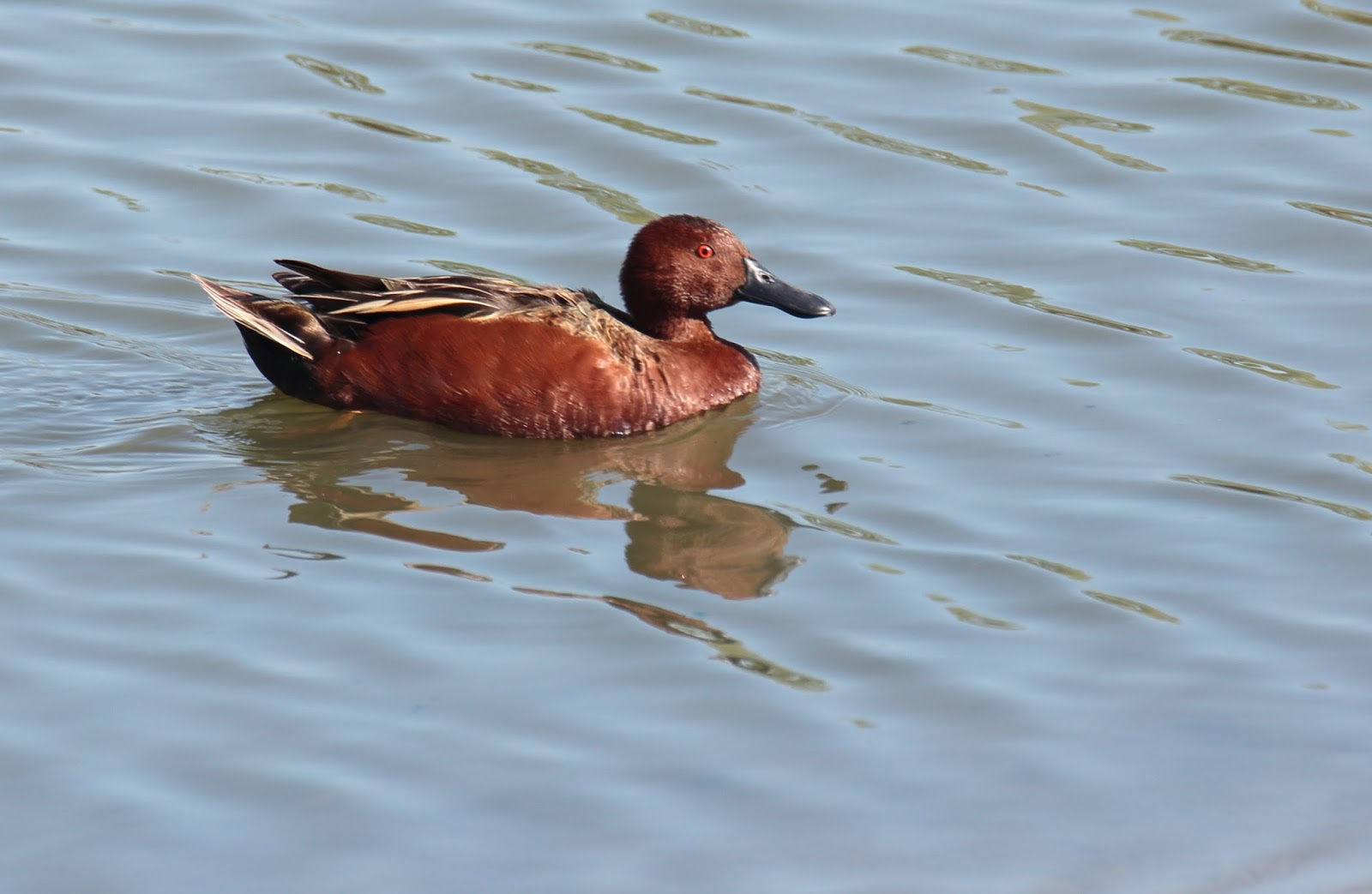
Cinnamon Teal
The long-legged waders were up and about.


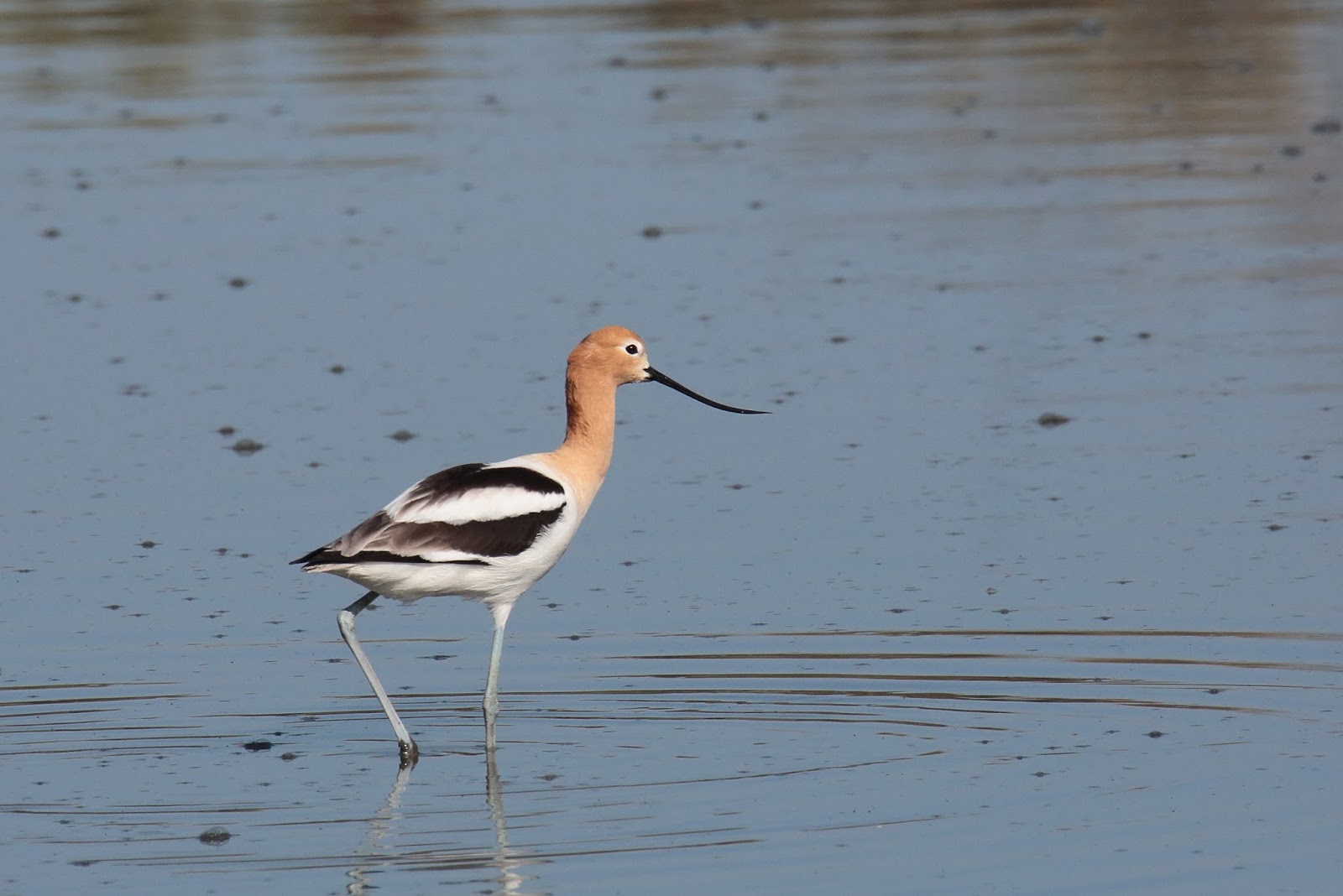
American Avocet
Black-necked Stilt
There were fewer birds than usual at Bolsa Chica because most of the migrants have returned to their breeding grounds way up north.

The uncommon Reddish Egret was performing its fishing dance.


The long-billed birds were already busy pursuing their morning meals.


Long-billed Curlew
Long-billed Dowitcher
Marbled Godwit
The Belding's subspecies of the Savannah Sparrow is a sure sighting here.


The absence of the migratory duck species were compensated by these crested swimmers.


Horned Grebe
Red-breasted Merganser
It was spring break, so to speak, in terms of bird migration. That was why there weren't that many birds compared to the colder months of the year. 

All in all, we had a good birding experience, low water level notwithstanding.

Monday, March 23, 2015

Once Was Lost.....

Imagine my horror when not a single photo showed up when I was uploading my CF card to the laptop! And to think that the photos I took were of the birds of two of our favorite spots in Orange County - San Joaquin Wildlife Sanctuary and Bolsa Chica - and also those from our first day in Arizona! My mind raced to what caused such mishap. Perhaps it was when I reset the date in the camera settings. It was still in Philippine time so I changed it to U.S. Pacific Coast time. Or I might have pushed a wrong button. In a state of panic I asked for help via Facebook. Friends responded quickly. Two of them, Jun Osano and Micky Lim, even offered the codes needed to access the data using a specific software. I tried those but somehow it didn't work. Possibly it was because the software was designed for the Sandisk brand whereas my CF card's was Lexar.

Days passed and my heart still couldn't bear the fact that I might have lost my shots for good. Not that there were any photo lifers there, or that Cynthia also took pictures of practically the same birds using her own camera. Still......

I took the CF card to Samy's Camera who quoted me $35 for the recovery process. That afternoon I got a call from them saying they were not able to recover even a single shot from the card. So we went to the store and picked up my damaged CF. Since Cynthia and I are planning to go to Costa Rica in a couple of weeks, I bought a 64GB Lexar CF card which was on sale. At home when I opened the package, voila! there was a code provided should I need to recover a damaged card! After downloading the recovery software we (with my son, Kurt's, help) tried to work it out. Yes, we managed to get some raw files but they were from an earlier session and not those from the Orange County foray.

It was after our trip to Costa Rica and with a lot of time in our hands that I tried to run the software again. This time it was a complete success! What were once lost, now are found!

Here are some of those recovered shots:


American Avocet
Black-necked Stilt
Allen's Hummingbird
Savannah Sparrow
White-crowned Sparrow

Wednesday, April 04, 2012

Whoaa, Waterbirds!

It was a bonanza! There are always a lot of waterbirds at Bolsa Chica in Orange County, I know that for a fact. The afternoon of March 19 was no exception. After enjoying the exotics at the Los Angeles Arboretum that morning, I asked my companions that we visit my favorite wetlands after lunch. It was hot when we arrived so Cynthia and Kurt decided to sit this one out (after all they were exhausted after a whole morning of shopping).

Despite the heat, I had a blast taking pictures of different kinds of wild ducks and various shorebirds despite using only my 300mm lens.

American Wigeon
Bufflehead
Blue-winged Teal
Cinnamon Teal
Long-billed Dowitcher
Marbled Godwit
Long-billed Curlew
As it will be the case with the rest of my birding days in the U.S., there was always a "bonus" usually just before ending my sortie. Here at Bolsa Chica, it was a Horned Grebe in its colorful breeding plumage, feasting on some unfortunate fish.


For the rest of the Bolsa Chica bird photographs, please visit my gallery: Birds by Location . And click on California near the bottom. Thanks!

Monday, June 22, 2009

Carpet of Plovers

The sun finally burst forth on Wednesday dissipating the gloom that prevailed over Southern California for about two weeks. I needed to untangle the web of sluggishness that had enveloped my being the past fortnight (and lose the pounds that seemed to have discreetly added to my weight). So I grabbed my "bazooka" and prepared myself for a staggering one mile hike (ha-ha) around Bolsa Chica in Orange County. Of course this arduous endeavor included frequent stops to photograph the teeming local avifauna.

The most common of which were Semi-palmated Plovers. I love plovers - they are such cute little birds which those big, adorable eyes - and Semi-palmateds are perhaps my all time favorites. Bolsa Chica was carpeted with these birds, some even venturing on the trails with such a sans souci attitude that I have not witnessed before.


There were other birds of course - terns were twittering and dive bombing the lagoon in great numbers and dowitchers were probing the muddy waters with their long bills in a peculiar sewing machine motion. A Great Egret caught a good sized catfish that took what seemed like an eternity to swallow.


At the end of my "trek" I was huffing and puffing and convinced that I have lost a significant amount of poundage. Which I immediately regained by feasting on a burger combo at McDonald's.


For more interesting birding blogs and photographs please visit:

Tuesday, May 19, 2009

This Gray's Fool

It was a dark and gloomy morning. Suddenly a shot pierced the cold air.

"Did you get him?", Cynthia asked me with a bit of trepidation.

"I think I did", I answered as I showed her the picture of the wading bird that I just "shot" with my new Canon 5D Mark II camera.

I was experimenting with the automatic ISO setting of this model and the prevailing gray skies provided such an opportunity. Especially with a grayish subject as the Reddish Egret. I thought the camera performed quite well.


We were at Bolsa Chica last Saturday where we joined up with our new friend (and new birder) Pat Thelen, whom we met last month at San Joaquin Wildlife Sanctuary.


Surprisingly it wasn't really birdy that gray morning. It seems like only the terns were active. A Snowy Plover was sheltering its young from the cool breeze that was sweeping in from the ocean, making it appear like it has three pairs of legs. We found them in the area behind the green fence (which was actually built for their protection).


As we were scanning the various birds lounging by the water's edge, Cynthia asked for the identification of one bird that seemed different from the Black-bellied Plovers and Lesser Yellowlegs that it was mingling with. The giss (general impression on size and shape) indicated that it was some sort of phalarope, although it didn't look exactly like the Wilson's or the Red-necked that I have seen before. We moved on leaving the mystery bird's ID as an inconclusive "phalarope". We walked towards the tidal gates and not seeing anything really interesting - everything appeared to be grayish - decided to call it a day. When we passed by the fenced area on our way back to the parking lot, we noticed a lot of birders peering through their binoculars and scopes.

"Must be the Snowy Plovers", I told my companions. I was surprised to see fellow blogger/birder Felicia Lee among the plover spectators. She's back from Florida and spending her summer vacation here. We were busy catching up when a couple of bird photographers arrived and asked if the Red Phalarope has been seen. Felicia then replied to them pointing to the water's edge, saying it was there.

Cynthia and I were already well on our way home, when it finally kicked in. Red Phalarope!! It was that species that we saw earlier and didn't think much of it then. Red Phalarope, a lifer for us! Red Phalarope, which I didn't even bother to take a picture of! I felt like a fool!

Here am I two days later and I'm still kicking myself.

Tuesday, March 24, 2009

Down the Hatch

Our friend, Voltaire Yap, was flying down from San Jose to supervise their company's trade show at Anaheim. He wanted to squeeze in some birding/photography at Bolsa Chica and so my wife and I agreed to meet him there.

The weather wasn't cooperative as it was quite gray when we got to Bolsa Chica around 11 am. Not surprisingly, there were only a few people braving the nippy winds. There weren't a lot of birds either. However, we got lucky as we watched a Red-breasted Merganser hunt for food with a good amount of success as shown in the following photographs.


An hour and a half quickly went by and Voltaire by dint of work obligations had to leave. Despite the dark skies we had fun and certainly enjoyed the company.

For more bird stories and photographs, check out Bird Photography Weekly # 30 at:

Monday, January 19, 2009

"The Stuff That Dreams are Made of" *

Well, maybe not exactly. But with the ease of finding my fifth lifer for the year, it seemed so dreamlike.

Perhaps it is the month for Scoters since I just recently added the Black Scoter to my lifelist (number 4 for the year) and now a White-winged was sighted at Bolsa Chica. It was a little before 9 am on Thursday, Jan 15th, when I started my quest. Walking along the path that parallels the Pacific Coast Highway, I looked at each and every duck-like bird on the channel at my right. The fact that the Ruddy Ducks, Northern Pintails and female Lesser Scaups and Surf Scoters were all brown and looked similar from a distance made my task a bit daunting. Not to mention that most of these birds were still sleeping and had their heads tucked under their wings, thereby making it much more difficult to observe the tiny white feathers under the eyes of the White-winged Scoter – field marks that would separate it from the rest of the brown plumaged flock.

About halfway along the trail, I noticed a small number of Lesser Scaups beginning to stir from their nap. One of them didn’t seem to belong – having a much darker plumage and is a tad bigger than the rest. Using my binoculars, I thought I saw the large, dark bill (unlike the gray color of a Scaup’s beak). It could be my White-winged Scoter but it was at the other side of the channel! Nevertheless, I fired off a couple of shots just so I could have some “documentary” evidence that I have now seen my fifth lifer. (Note: Some of us bird photographers call a not-so-good photo of an uncommon bird or a lifer “documentary” which basically means: I could have done a better job at photographing this **deleted** bird!) Anyway, I was now faced with a dilemma: I need to get to the other side at the fastest time possible and pray that the scoter will remain where it was. Do I get there via the boardwalk or via the tidal gate – both options probably covering the same distance (read: far). I took a deep breath and headed towards the tidal gates in quick, long strides. Running was out of the question as I would probably collapse in sheer exhaustion even before I reach my destination. Finally, in what seemed like an eternity (and trying not to be distracted by any photo opportunties the other birds in the area presented), I reached the place where the Scaups and my Scoter were preening. There it was, close enough for me to be able to confirm that it was indeed a White-winged Scoter. Unlike the Black Scoters at Ballona which kept me and my wife in suspense for almost three hours before finally making an appearance, this was as sweet as a pleasant dream. 


* The Maltese Falcon, 1941

Monday, October 13, 2008

Pelican Brief-ly

Yesterday, my wife and I did something that we haven't done for awhile. It was refreshing, exciting and such fun even if it lasted only a little more than an hour.

We went birding in the afternoon. At Bolsa Chica. We were so used at driving there without any problem that we were just appalled at the traffic jams we encountered.


After an hour and a half (what normally takes less than an hour), we finally arrived at our destination. Surprisingly, there weren't too many people around. The boardwalk was almost empty.

Then we found out why. Blustery winds that further lowered the temperature of an already chilly afternoon. But we were prepared - having worn jackets and sweaters in anticipation of such a weather condition.

The Pelicans were there, putting on their usual show of leaping from their swimming position, flying low and then plunging into the water after some unfortunate fish.


The usual denizens of a coastal mud flat were there. It was dinnertime for the birds and this Long-billed Curlew was enjoying a fresh mussel still in its shell.


A Black-bellied Plover, on the other hand, was able to "un-shell" its meal.


One reason why I wanted to go to Bolsa Chica was to see the Reddish Egret. It has been a year since we last saw it - and it was at some distance when we did. I was hoping we would get some closer looks this time. At the trail east of the tidal gates, we saw a juvenile Reddish Egret cavorting at a place too far for our camera lenses. I prefer to see the more colorful adult anyway, I told my wife. By now the sun was getting close to the horizon, so we decided to hike back. Don't worry, Cynthia assured me, God will send the Egret to us. It was while I was shooting at the moon (literally) halfway through the return trail, that I glimpsed an adult Reddish Egret fly by and land at a mudflat not too far away. I called my wife's attention to it and as the sun's fading light bathed the place in a warm red-orange glow, we had our moment with the lovely egret. That orange glow and the blowing wind created an image that seemed like the egret was on fire. I thought it appropriate to call it, "The Firebird".


Friday, August 29, 2008

Chica Chica Boom

My recent fiasco with the Buntings and Bishops sort of awakened my too complacent photographer spirit. It's time to get down to basics. Time to put into practice the principles learned ages ago. Time to look back into past experiences and benefit from them.

When I sallied forth into the Bolsa Chica Ecological Reserve last Wednesday, my one and only purpose was to photograph birds. Take pictures of any bird, in any situation, then go home and determine if the resulting shots showed any progress in my abilities or not. I did not wear my birder hat that day.

It turned out to be gloomy that morning which did not daunt me at all. After all, I wanted a challenge. And what could me more challenging to a photographer than overcast skies. Right off at the boardwalk, I saw a Black-crowned Night Heron in full breeding plumage, standing motionlessly among the vegetation as it patiently waited for some unwary fish. An unmoving subject would be a good start, sort of to give my confidence a boost, I thought. I mean, how can you go wrong with a bird that stays still under gray skies? That shot went quite well.


Feeling encouraged, I moved on where I encountered a small flock of Western Sandpipers. In contrast to the Night Heron, these are tiny birds that like to scamper along the water's edge. I was now faced with the challenge of focusing at a small, constantly moving object, whose plumage blends with the watery background. Got a good shot there as well.


Farther up the trail where the tide gates are, a group of young Forster's Terns were sallying from the posts and diving into the waters hoping to grab an edible morsel. White flying birds became my next challenge. I must admit that BIF (birds-in-flight) photos are not my forte. The fact that I was using a 300mm with a 1.4 extender (which slowed the auto focusing) made me even more resolved to get these shots right. I was rewarded by a couple of fairly good captures - better than most of my previous BIFs.


But then, I thought that I got the terns when they were hovering - not exactly a BIF. When a Black Skimmer flew by and started doing its unique feeding style - cruising a few inches above the water surface with its lower beak submerged - it presented a true flying bird shot opportunity.


Not long afterward an immature Brown Pelican flew in and displayed its own style of feeding: float on the water looking for prey, fly a short distance and plunge into the water and grab the fish with its enormous bill. For a huge bird, it does this maneuver with grace and agility.


I continued to spend the rest of the morning taking shots of the various birds that I encountered. I felt that I have lived up to the different photographic challenges presented my way with some degree of success. So satisfied was I with my photography that I even switched to videography - capturing the antics of a Green Heron, some Sandpipers and a Black-bellied Plover trying to eat a clam.

Below is the video of the Green Heron. The music is titled "Ay Cosita Linda" which means "what a cute little thingy". It refers to what the heron did towards the end of the clip. :-) Enjoy!

Monday, June 02, 2008

Re-tern to Bluesa Chica

On a bright, sunny Saturday, the place to be is at the beach. It has been awhile since we visited Bolsa Chica in Orange County and sightings of a Little Blue Heron - a California rarity - was incentive enough.

There weren't that many people there when we arrived. Usually, the boardwalk would be filled with photographers of various shapes and sizes wielding lenses of various shapes and sizes. Not this time. Perhaps it was the obvious lack of birds - only terns were whizzing by - or the ridiculously high gasoline prices that prevented my colleagues from visiting this popular place.

Anyway, the first bird that we saw was a Savannah Sparrow. For some reason they were bolder this year. 

Meanwhile, Cynthia was busy capturing a Black-necked Stilt tending its nest.


How can such a long-legged bird sit on its nest? you might ask. Well, here's how:


At the end of the boardwalk, a Least Tern was also patiently sitting on its egg.


As I mentioned earlier, there weren't that many birds along the trail. A Black-bellied Plover was starting to put on it's summer plumage. Marbled Godwits competed with Willets for foraging rights on the mudflats. By the tidal gates, terns of different varieties were having a field day diving for tiny fish.


Somehow, mama duck and her brood of eight managed to evade the dive-bombing terns.


We rounded the trail without seeing the Little Blue Heron. Cynthia needed to answer the call of nature so we drove to the nearest fast food restaurant. "Do you want to return to Bolsa Chica?" she asked me afterwards. It was still quite early, so we did. This time I chucked my big lens and opted for the smaller 300mm. We planned to hike to the mesa and a lighter gear would give my aching shoulders a much needed relief.

Halfway up the boardwalk, I noticed something blue fly by us. It was the Little Blue Heron! Half-running we chased after it until it landed on the shallow part of the lagoon some 30 yards away from the trail. Slowly, it worked it's way northward. About 50 feet ahead, the lagoon would be only a few feet away from trail. Anticipating that the heron would end up there, we positioned ourselves and waited. And waited. And waited. Just as it turned the bend, we started shooting but then the sun was overhead and cast shadows on the heron's blue face. Besides, it was still too far for our short lenses to get a decent shot. I dared not go back to the jeep to get my big lens, pessimistically assuming it would be gone by the time I got back. It was then it decided to fly off towards the tidal gates. We thought of chasing after it, but not knowing where it landed, we both agreed that it was enough that we saw what we came for and still got some "documentary" shots of it.


As we walked back to the parking lot, Cynthia reminded me that we already had some gorgeous photographs of the Little Blue Heron that we took in Texas. No need to get frustrated here, she said consolingly. My wife has always been the voice of reason in a situation like this. Now how can you argue with that?