Showing posts with label grey heron. Show all posts

Sunday, October 31, 2021

Ardei Day

Taytay is one of the very few places that we can go birding these days. In my previous blog I wrote that due to old age creeping in on me, I find it quite difficult to drive long distances. So Saturday morning we were at the usual roadside area along a wetland. To our surprise the place was teeming with species of the Ardeidae family! Several kinds of Herons and Egrets (but interestingly none of the skulking Bitterns) were everywhere!

Let me start with the Herons - Black-crowned Night Herons (both adult and immature), Purple Herons and a totally unexpected Grey Heron!

Black-crowned Night Heron - adult
 
Black-crowned Night Heron - immature

Purple Heron

Grey Heron

 Then there were the Egrets: from the Littlest to the Greatest and an Intermediary in between. Allow me to clarify that: Little, Intermediate and Great Egrets were all present.

Little Egret

Intermediate Egret

Great Egret
 

As a bonus we got the Eastern Cattle Egret at U.P. Diliman.

Eastern Cattle Egret
 

Not a bad harvest on a short birding morning with the Ardeidaes!

Saturday, November 02, 2019

Up on the Rufous

Despite it being quite common, we never had a good photo of the Rufous Night Heron. The ones we had were taken in Olango and it was of an injured individual being rehabilitated at the local administration's office area.

Recent pictures of this species taken at the LPPCHEA (Las Pinas-Paranaque Critical Habitat and Ecotourism Area) and posted in Facebook sort of prompted us to make plans to visit that place. Since a great majority of the population of MetroManila would either be visiting their departed relatives at the cemeteries/memorial parks or taking a vacation because of the long weekend on All Saint's Day (November 1), Cynthia and I both agreed that that would be the perfect time to go to the "beach" and hopefully bring up the quality of a Rufous Night Heron photo.

It took us less than an hour to get there, considering we made a few wrong turns and also almost losing our patience waiting for our breakfast order that took quite some time at an undermanned Jollibee along Roxas Blvd. 

It was not yet even 6 am when we entered LPPCHEA. After I parked our car, we started scouring the seashore. Cynthia pointed at some movement. My ancient pair of eyes couldn't see anything at all. My wife took a "documentary" shot just so she could point the area where there was supposed to be a wader. Looking at the image I was thrilled to discover that it was the species we came here for. We inched closer to where the bird was and finally I was able to get some shots.

As it turned out, it was a Rufous Night Heron morning. In our almost three hours of birding, we saw 8 individuals, ranging from juveniles to adults, standing on the shore or flying over.


Of course, there were other birds there too. Its close relatives, the Black-crowned Night Herons, were present. We even saw one flying above us with a fish in its beak.


Unfortunately, it was a gloomy morning with dark clouds foreboding some rain. Not only that, it was also low tide. My wife even jokingly said that we should have brought along some wellies (that's wading boots to you non-Brits) so that we could slosh towards the wading birds. That said, most of our photos were dark and the subjects quite far. Here are some samples.


Intermediate Egret
Common Greenshank
Common Redshank
Common Sandpiper
Grey Heron
Little Egret

Lesser Sand Plover
Pacific Golden Plover
Whimbrel
After our walk along the shore, we decided to drive over to where the docks were. Along the road was the kingdom of the Collared Kingfishers. Every hundred meters or so we would see one perched on a rock.


It was while driving on the muddy road (it rained the night before and there were some small pools on the unpaved road) that we saw a brightly colored bird fly across. For several times the reddish-orange bird kept flying left and right until it completely disappeared into the dense foliage by the creek. I then realized that it was most likely the migrant Ruddy Kingfisher that had been seen here by some lucky fellow bird photographers.

Around 8:30 am and we were drenched with sweat from the extreme humidity. Inasmuch as we got what came here for and then some, we both agreed it's time to go back home. Near the entrance, as we were about to pack our gear, Cynthia noticed some movement at a nearby tree. To end our birding day, we obligingly got some shots of a Yellow-vented Bulbul and a Brown Shrike.


Yellow-vented Bulbul
Brown Shrike
Just like that morning, it took us less than an hour to reach our home despite taking some wrong turns, again! Somehow the Waze app was no longer as efficient as it used to be. How we wished that driving in MetroManila would be as traffic free as it was that day.

Tuesday, May 21, 2019

Osaka Birding - Day 2

Having learned from yesterday's fiasco, we asked the concierge at our hotel to call a taxi for us to take us to the Osaka Nanko Bird Sanctuary. It took us about ten minutes to get to our destination. The fare was a bit steep though - $10 - for such a short distance. Nevertheless we were glad that we are now at the birding spot we so wanted to visit.

The "hide" if you would call it that, is a semi-circle concrete structure with windows overlooking the wetlands and chairs in front of those windows for photographers to sit while taking pictures of the birds. 


However, it doesn't open until 9 am and it was only a little before 8 when we arrived. So we decided to explore the surrounding wooded area. Apparently not a good idea. For one thing birds were sparse - only the ubiquitous White-cheeked Starlings, Eurasian Tree Sparrows and Brown-eared Bulbuls were there. Another thing was the presence of gnats and other flying insects that would swarm at our faces apparently attracted by our warm breaths and moist eyes, perhaps because it was gloomy and a bit cold that morning. We met another local bird photographer who was standing by the trail looking up obviously waiting for a bird and frantically shooing away the insects that kept attacking his face. He spoke a little English and showed us what he was looking for - a Japanese Paradise Flycatcher! Unfortunately the whole time we were there the star bird of Osaka never showed up.

Nine o'clock we entered the "hide". As if on cue a flock of shore birds flew in. The sad thing was they were at some distance, too far even for my 600mm lens. Even farther away was a Great Cormorant perched on a stump. 


Some of the better shots we got were interestingly enough, the "Grey" birds:

Grey Heron


Grey Plover


After almost an hour most of the shore birds flew away. Then in flew a few Eastern Spot-billed Ducks.


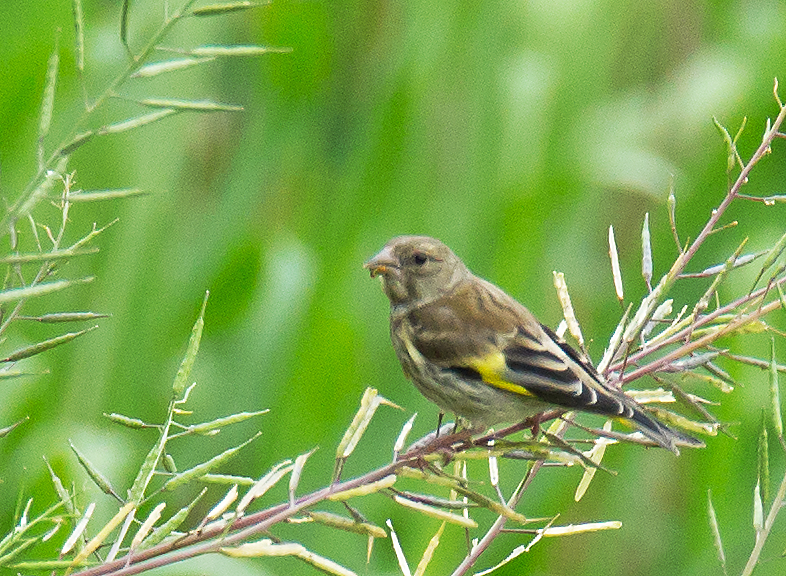
Half-past ten and there weren't any interesting new birds. Then I saw an "LBJ" (little brown job) feeding on a grass stalk. Hoping that it wasn't a Eurasian Tree Sparrow, I peered through my long lens and got excited! I couldn't identify it at that moment but I knew it would be something new for us. Searching the internet later that day I was so thrilled that I was right in claiming it as lifer number four - the Grey-capped Greenfinch.


The long walk back to the hotel wasn't as bad as we thought it would be, now knowing the route we had to take.

Sunday, November 05, 2017

Getting Mud

The last time we went to Candaba was in January of 2016. I can't believe it had been that long! For one thing, that place was no longer as promising as it used to be. Most of the marshland where migrants spend the winter had been replaced by ricefields.

A little more than a week ago a couple of friends posted some birds photos taken from Candaba in Facebook. Photos of migrant waders and Philippine Ducks! So we went Saturday morning. But as luck (or the lack of it) would have it, it was gloomy on that particular day. Not only that because it had been raining the past few days, access to the marshy area became impossible. So we just birded along the asphalted road towards the town of Candaba itself.

Unfortunately, because of the recent rain, the water in the area near the road had become too deep for the migrant waders. Thus the Sandpipers, Stints, Plovers, and Snipes were gone. Only a couple of Grey Herons flew by, not even landing anywhere close. 


The Black-winged Stilts were plentiful but they were at quite a distance where presumably the waters were shallower. A few Intermediate Egrets strayed a bit closer.


What was interesting was a territorial dispute between a Whiskered Tern and a Little Egret. Sort of "King of the Pole" game.


Whiskered Tern: Hey, I got here first!

Little Egret: Yeah, right.

Little Egret: Nana, nana, nana!

Also interesting was the lack of Rails. No Barred nor Buff-banded ever showed up. The White-browed Crake and White-breasted Waterhen were present but both were extremely skittish.


Oh, and no Kingfishers as well. Other than that, the Passerines were at their usual haunts.


Chestnut Munia
Paddyfield Pipit


Pied Bush Chat - male

Pied Bush Chat - female

Striated Grassbird
At about 9:30 we decided to call it a day. As we were boarding our car, we noticed mud! On our shoes and stuck on the tires and the underparts of our vehicle. Surprising because, as I mentioned earlier, we were mostly at the asphalted road. Only in some occasions that I had to park on a grassy roadside. It was so bad that we had to stop by a Shell station in Baliuag to have our car washed. And it took about two hours to bring back the spick and span to our car, thanks to the perseverance and diligence of the person who did the washing.

As we were driving along EDSA, guess what happened? It rained.

Wednesday, October 16, 2013

Four Kings - A Winning Combination

The sun shone brilliantly after the storm. It was a holiday. A perfect combination for a birding spree. Even if the destination was just at the La Mesa Ecopark not that far from home. Lately, however, that place had been abuzz with sightings (not to mention posting of photos in Facebook) of two, count 'em, two uncommon kingfishers - the Spotted Wood and the Indigo-banded. Not only were both simply photographable, they were uncharacteristically insouciant to people.

Thanks to the directions provided by Anthony Balbin and Prof. Reuel Aguila, we (me, my wife and buddy Bong Nabong) easily found the place where the pair of Indigo-Banded Kingfishers hang around. During a lull - while the lovely pair was away - Anthony, called us and told us he found the other "star" of Ecopark. We quickly followed him and voila! - the friendliest Spotted Wood Kingfisher ever! 


Our friends, Maia, Jops, and Doc Cha who came after we left gushingly told us that the kingfisher was so indifferent to human presence that Doc Cha was even able to photograph the bird using her iphone!


On our way back to the Indigo-banded Kingfisher pond we met another friend, Jo Solis, who told us that she just saw the Oriental Honey Buzzard. We followed her and caught a glimpse of the raptor before it flew away.

At the pond, there were now more photographers awaiting the famed pair's return. The three of us joined Steve Albano,  Prof. Reuel, Alex Ting, and Leomar Doctolero in the stake-out. Soon Maia, Jops, Doc Cha, Bram, Kath and Sean Melendres arrived. Perhaps knowing that they now have a big audience, the male (who was nicknamed "superman" because his plumage resembles the superhero's costume) made a grand entrance and perched on a small piece of protruding wood and stayed there until we all had our fill.


As we prepared to leave, Sean informed us that he saw White Wagtails at the spillway. "There was also a Grey Heron" he calmly said as if that was as common an occurrence as rainfall in October.

Cynthia, Bong and myself, of course, went to the spillway. Steve followed not long after. Yes, there was the Grey Heron which, if I am not mistaken, was the first time this species was seen here. 


And yes, there were White Wagtails - we saw at least two of them - but they were quite at a distance.


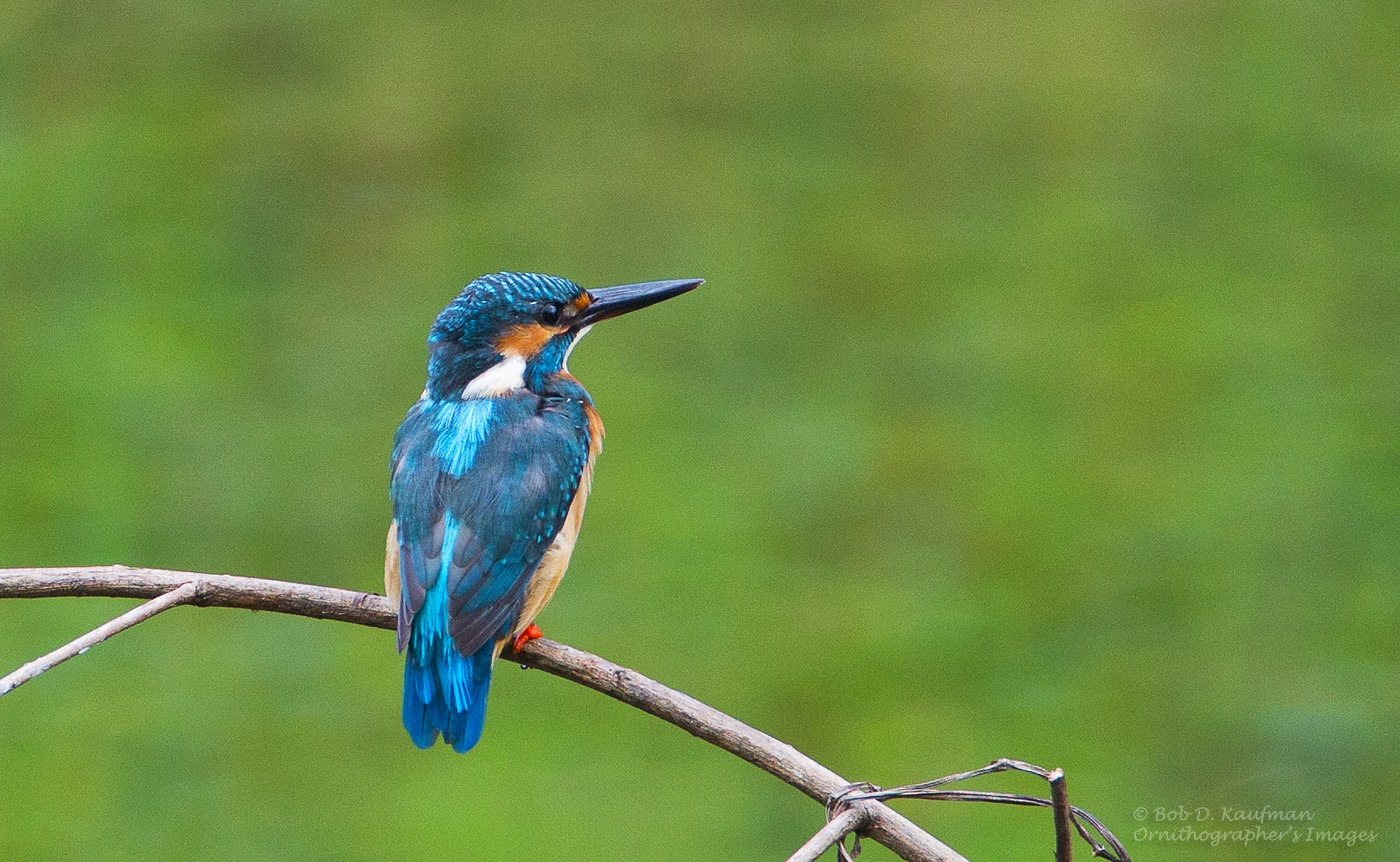
It was while waiting for the migrant wagtails that a Common Kingfisher popped into view. 


It was also while searching for the wagtails that we saw a Collared Kingfisher way out on the concrete spillway.


When Maia, Jops and company joined us, we were rewarded with views, albeit a bit distant, of a Philippine Serpent Eagle!

Beautiful weather, great company, four kinds of kingfishers in half a day's birding - definitely a winning combination!

Friday, December 30, 2011

The Candaba Trilogy, Part III - Hues Dunnit?

Closing out our half-a-day's birding at the Candaba Bird Sanctuary was our encounters with the various hues that made this place an avian paradise. Let us now take you on a visual trip to the wonderful world of colors....


First off, let us meet the bitterns:


Yellow

Cinnamon

then the Herons:

Grey

Purple

Finally, a Turtle Dove:

Red

A joyous and colorful NewYear to all from Two Birders to Go, Bob & Cynthia Kaufman.