Showing posts with label golden-bellied gerygone. Show all posts

Sunday, February 28, 2021

Bird and Breakfast - Part 2

Friday night I told Cynthia that I didn't have any plans to go birding on Saturday. Then I asked her if she wanted to eat out for breakfast. She replied, "Let's go to Rodic's at U.P.  Let's bring our cameras just in case."

Saturday morning we set off for our planned breakfast. We took the usual route via White Plains to see if the resident Little Egret was still in its favorite spot on the waterway. But even before we reached the place, we saw a Large-billed Crow perched on top of an electric post.


Not far away from it, a Crested Myna was roosting on an electric wire.


It had been said that black birds forebode bad luck. Not in our case. It was the first time we saw both the Crow and Myna in this area, despite the many times we passed by here. And to me that in itself is good luck. As we looked into the waterway, the Little Egret was there, even closer than before!


We even got a bonus of Philippine Pied Fantail at a nearby tree.


Driving along Temple Drive, I was surprised to find a Striated Grassbird (my nemesis bird lately) perched out in the open!


I drove slowly scanning the trees across the street. As we passed by an empty lot, I saw a Collared Kingfisher perched almost at ground level! I made a quick u-turn but as soon as I got near, the bird flew away not to be seen again. However, we noticed some activity at the tall grass. Cynthia got some shots of a Scaly-breasted Munia.
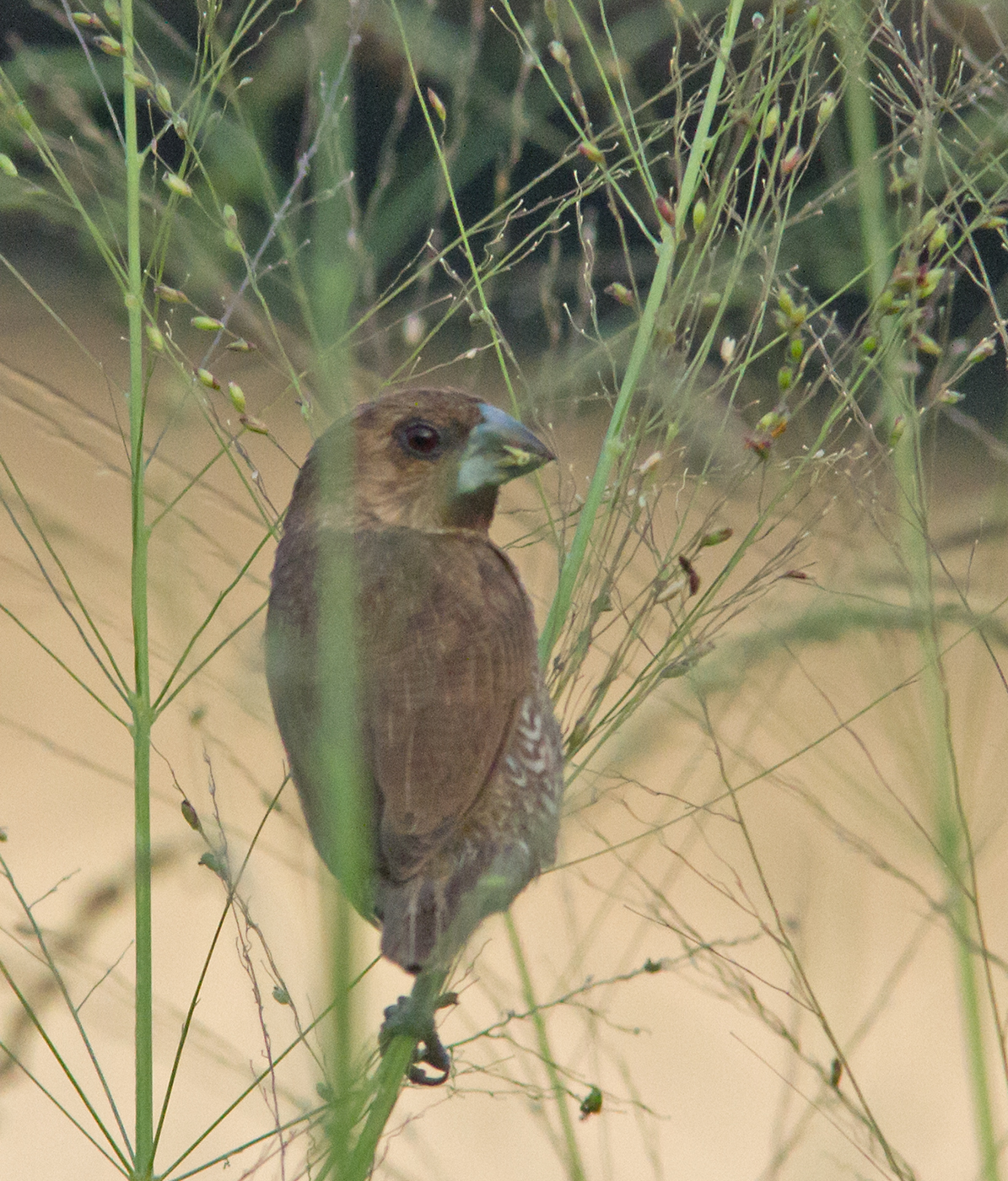


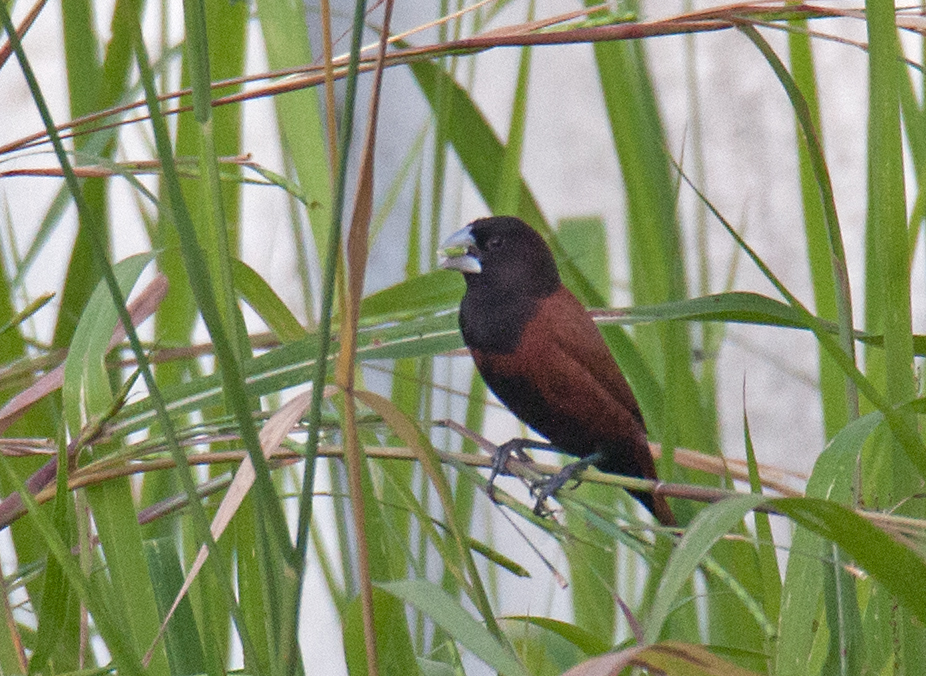
When I joined her, what I saw were Chestnut Munias!


From there we proceeded to our breakfast place. It was full and there wasn't any parking spot available. Thanks to the help of the security guard we were able to get a parking space. We then enjoyed the best tapsilog there is. After the sumptuous breakfast we went to the MSI area in U.P. Feeding in an aratiles tree was a Red-keeled Flowerpecker. It was so active that I only got a documentary shot.


Then we took the obligatory photo of the Brown Shrike.


A family of Olive-backed Sunbirds were also feeding on a flowering plant.


High above a Black-naped Oriole was bringing food to its nestlings.


A Philippine Pygmy Woodpecker was already busy that early.


And so were the Golden-bellied Gerygones.


Next stop was at the Astronomy area for the Long-tailed Shrike.


Then at the place where the Grey-streaked Flycatcher hangs out.


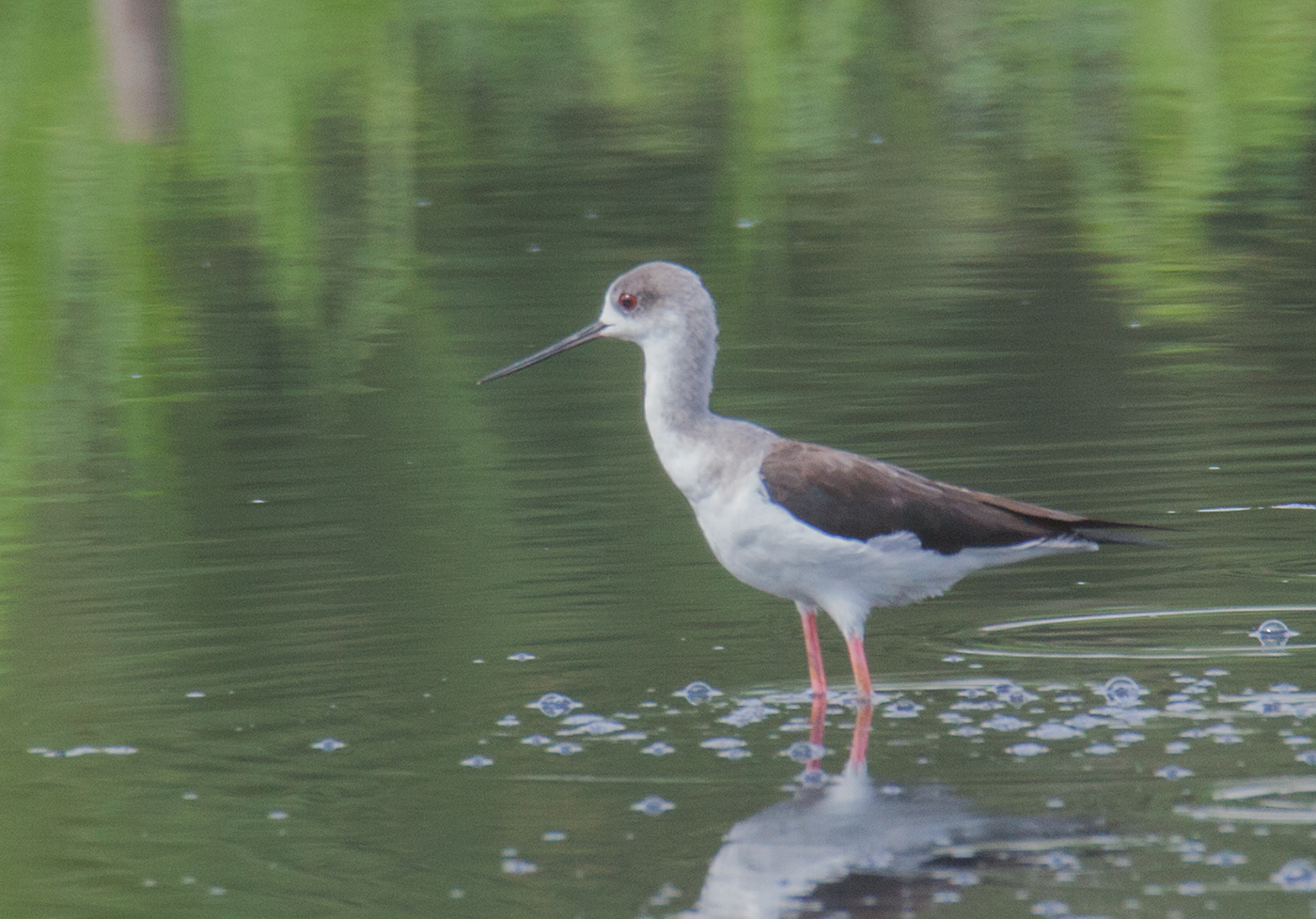
On our way home we stopped by the Hardin ng Rosas. This time Black-winged Stilts were closer.


And the Common Moorhen was basking in the sun.


On the way out we saw a flock of Eastern Cattle Egrets perched on a tree.


We decided to make another stop over by the Marikina River. Again, this time the Egrets (a few Little and a single Chinese) were closer.

Little Egret

Chinese Egret


The Whiskered Terns were busy diving for food.


For an "unplanned" birding sortie, we were rewarded by quite a number of species and closer views of the more common ones. 

Saturday, October 31, 2020

Tanza Nah

Saturday, October 31, it seemed like all bird photographers in MetroManila are going to Tanza Marine Tree Park in Navotas City - to take photos of uncommon migrants, specifically the Pied Avocets and Black-faced Spoonbills. Take note: I said "all" bird photographers, that is except me and my wife.The main reason for that was I don't know how to get there. Surprisingly, the Waze app also does not know such park and therefore couldn't provide directions to that place.

So early morning of Saturday, October 31, Cynthia asked me where we will be birding. I replied in a most nonchalant way, "U.P. Diliman."  "Anyway, we already have photos of both of their target species," was my excuse. 

Thankfully, we had a fruitful experience. After a hearty breakfast at Rodic's, we proceeded to the MSI area. Along the way, we saw a small flock of Eastern Cattle Egrets foraging among the tall grass.


At MSI, we got some shots of the Pied Triller, Brown Shrike, and the Philippine Pied Fantail.


From there we went to the Astronomy Building. Along the way, a Zebra Dove popped up on the side of the road next to our car.


The regular resident Long-tailed Shrike was at its usual perch, however it had it back turned and I wasn't able to get a good shot. While I was trying to wait for it to turn around, my wife saw a Black-naped Oriole perched on a branch across from where the shrike was. The oriole appeared to be basking in the sun and was occasionally preening.


Frolicking among the branches near the oriole were some Golden-bellied Gerygones.


Our next stop was at the Tabuhara place. There were a couple of flowering plants where Yellow-vented Bulbuls were feeding.


Next to it a pair of Olive-backed Sunbirds were also enjoying the yellow flowers.


Then a Eurasian Tree Sparrow perched on an electric wire above the plants so I just had to take the obligatory shot.


Before ending our birding morning, I suggested we go the Astronomy Building hoping that the Long-tailed Shrike would be in a better position. And guess what, it was!


And thus endeth our birding foray for Saturday, October 31. Did we regret not going to Tanza? Nah.

Friday, September 11, 2020

It's back!

During our daily walk around our condo grounds we are always on the look out for birds. Occasionally we would bring binoculars and sometimes our cameras. Since we saw quite a number of birds last Wednesday, on Thursday morning I decided to bring my Canon 5D3 with the Tamron 150-600 lens with me. My wife and I also hoped that the Brown Shrike would be around. Since the beginning of September, we always looked at the places where the annual migrant used to hang out the previous years. And it was still a no show.

After watching the daily morning pilgrimage of the Yellow-vented Bulbuls (for the past couple of months we have observed their daily routine where small groups would fly from South to North stopping now and then on the tree tops by the river, and we wondered why this sudden behavior), we paused by the parking lot to watch the sunrise. It was then that Cynthia heard the twittering of the shrike. We moved closer to the wall and voila! Our hoped for migrant was finally back!


Happy that I got tons of shots of the cooperative shrike, we moved on. As expected the Yellow-vented Bulbul's "towncrier" was at its usual perch and calling loudly to its fellow "pilgrims" who were passing by.


Our next target was the Philippine Pied Fantail. As we approached its usual milieu, a small flock of very active Golden-bellied Gerygones were darting all over the place.


As if that wasn't enough, another flock, this time of Lowland White-eyes mingled with the Gerygones in hunting for their breakfast.


A little further down, the usual pair of Fantails showed up.


Having accomplished our goal (and even got a bonus) we walked back towards our building. Along the way, we heard a Zebra Dove calling. After some effort at trying to locate the source of the cooing, we eventually found the bird partly hidden among the leaves.


As we entered our building, I told my wife that I should at least take a photo of the very common Eurasian Tree Sparrow. Let's go the Great Lawn, she suggested, where this species is definitely a sure sighting. So we did and I got my list of local birds completed.


Saturday, November 24, 2018

Dearth Birder

Two things: We haven't birded as often as we used to. The weather had not been cooperative this year - either too much rain or too hot to get out of the house. And then old age seems to have finally crept on me. I no longer have the energy to go on long drives (almost a necessity when birding in the Philippines). The other thing was that somehow there was a dearth of birds at the places we've been to lately.

Yesterday was a good example of that. The Palos Verdes subdivision in Antipolo is one of our favorite birding places. We've seen some interesting birds during the many times we've been there, such as the uncommon Slaty-legged Crake. We've seen two kinds of cuckoos here, Mangrove Blue Flycatchers, Pygmy Flowerpecker, Philippine Cuckoo Dove, Golden-headed Cisticola, Barred Rail, etc. 

We arrived a little before 7 am and were surprised that the usual Long-tailed Shrikes and White-breasted Woodswallows were not at their usual spots on the electric wires. I eventually found the Shrike - a very skittish one at that. 


On the other hand, Cynthia was trying to get a clear shot of a Pied Triller who was having its breakfast.


Another obvious dearth was that of the Scaly-breasted Munias. Whereas before we've seen flocks of more than 20 individuals feeding on the grass just a few feet away from us, now we only saw about five flying over and only two came down near to us.


Another round and this time we saw some avian activity high in the tree tops. Golden-bellied Gerygones were in their usual hyperactive mode. My wife had the better shots as I was having a hard time focusing on the tiny bouncing objects.


One other species that weren't as plentiful as before was the Spotted Dove. We saw one perched on a branch. I just got a documentary shot.


Next was the challenge of taking pictures of the Grey Wagtail. It just kept moving and most of the time was in the shade.


Then there was this Zebra Dove that was more obliging as it walked nonchalantly not that far from us.


And what would birding be at this time of year without taking photos of the common migrant, the Brown Shrike. We saw one feeding on an unknown kind of insect. We were both in the car and this bird was on Cynthia's side, so she had an awesome opportunity to record the feeding habit of this bully bird.


By 9:30 and not seeing any more new species, we went to the Holy Garden Memorial Park hoping to get both the Paddyfield Pipit and the Pied Bush Chat. We got the the first and not the latter.


But we got a bonus in the form of a Collared Kingfisher.


As the year is coming to an end, we hope that we could get more opportunities to go birding and to see more species. We don't want to be a dearth birder. May the force be with us.