Showing posts with label red-keeled flowerpecker. Show all posts

Sunday, September 26, 2021

Back to Baras

Saturday morning, we decided to go birding at Palo Alto in Baras. The very first bird we encountered as we entered the subdivision was a Stripe-headed Rhabdornis.


As expected, the White-throated (Brown-breasted) Kingfisher was at its usual perch on the electric wire.


After having our take out breakfast, we moved on and saw the migrant Grey-streaked Flycatcher. Unfortunately it was backlit.


Along Alfaro road, near the waterway, we had a hard time focusing on the hyper-active Red-keeled Flowerpecker.


Moving on we got better shots of the usual denizens of this place: the Scaly-breasted Munia, Paddyfield Pipit and Zebra Dove.

Scaly-breasted Munia

 
Paddyfield Pipit

Zebra Dove
 

We also saw a pair of Spotted Doves perched on a bare tree.


The Eastern Cattle Egrets were quite plentiful. I got a BIF (Bird in Flight) of one of them.


Back at the waterway, we were surprised to see a White-breasted Waterhen. This was the first time we've seen this species here.


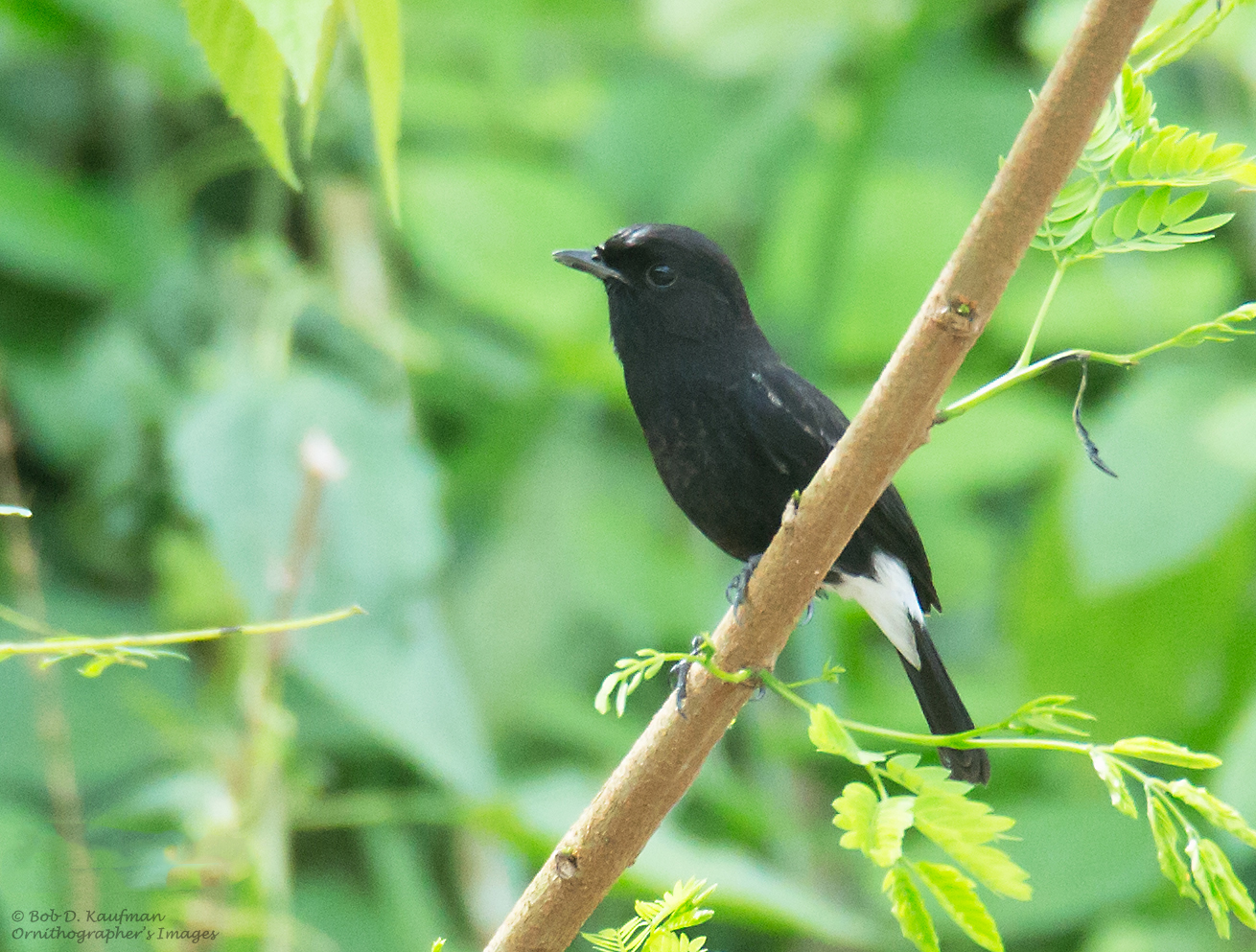
Along the creek, the expected Pied Bush Chats were busy hunting for prey.


Since it is already the migrating season, I told Cynthia we should visit the rocky area and who knows the Blue Rock Thrush might be there this time. As we passed the area, we didn't see any bird at all. However as we were going back, I noticed a bird on top of the low cliff. "There it is!" I told my wife excitedly.


That was the highlight of our trip. As we were about to leave we chanced upon a big flock (about 20 of them) of Red Turtle Doves!


Near the exit we got a not too good shot of our last bird of the day - the Whiskered Treeswift.


Thursday, December 31, 2020

Band of "Barasers"

Lately, the town of Baras in Rizal province had become a favorite place for taking pictures of birds. So Cynthia and I decided to go there for our last birding day of the year. Not long after we arrived we met a group of fellow bird photographers. Here is the group photo of the Band of Barasers: Ferdie Llanes, Chris Ferrer, Russel, Elmer Budomo, and Joel Dayao. (Photo courtesy of Atty. Tim Calumpong)


The very first species we encountered were two Turtledoves. But there wasn't a Partridge in a Pear tree.


As the band of Barasers were waiting for the Philippine Cuckoo-Dove to show up, I saw a Red-keeled Flowerpecker feeding on a nearby "aratiles" tree.


Then from behind where we were standing a Balicassiao flew to a branch a below us.


Since the Cuckoo-Dove was a no show, the group moved to the place where a Rough-crested Malkoha was seen. And sure enough, it peeped through the thick foliage.


As if to congratulate us in getting shots of the Malkoha, a Coppersmith Barbet began singing its "pok pok" song.


Having seen the target bird, we all agreed to proceed to the clubhouse where a flowering African Tulip tree attracts several species of birds. Along the way, we came across a White-throated Kingfisher.


As we were about to enter the parking area, a White-eared Brown Dove was on the ground foraging for food. That was an unusual habit for this species.


The expected Philippine Hanging Parrot was at the top of the tulip tree.


During lulls between the appearance of the male and female parrots, I took an obligatory shot at a Golden-bellied Gerygone.


And of the Brown Shrike, of course!


Soon another hoped for bird, the Stripe-headed Rhabdornis, came and fed on the red flowers.


After a while, a Sunbird, which was definitely not an Olive-backed came. Ferdie thought it was a Handsome and I believed it was a Luzon. Chris Ferrer later confirmed that it was a Grey-throated! I think this was the first time that this species was seen here.


We waited for the Naked-faced Spiderhunter but it didn't show up. So we told our friends that we would roam around the area to look for other birds. We went to the "hill"  hoping to see some raptors, the cuckoo-dove and the Blue Rock Thrush. No raptors and no cuckoo dove. There was a bird high up in the tree and I took a shot at it. Later Ferdie came and told us that the Blue Rock Thrush no longer stays near the ground when there are people around and prefers to perch on the tree instead. Looking at the photo I took confirmed that it was indeed our target bird.


At the "subdivision" area, the Paddyfield Pipits were everywhere!


Passing by the bridge, I saw a sandpiper at the canal area. It was confirmed later by Rob Hutchinson (through the photos posted by Ferdie) that it was an uncommon Green Sandpiper!


Of course, Pied Bush Chats, both male and female, were all over the place.


Eastern Cattle Egrets were among the cattle, of course!


I told Cynthia, that we already got a lot of bird photos but none of the Grey Wagtail yet (which we always see on the road). So another obligatory shot was made.


It was already 11 am and we agreed to call it a day. On the way out, we encountered a Blue-throated Bee-eater.


It was another fruitful birding day in Baras made even more enjoyable by some uncommon birds we saw and the company of the Band of Barasers.

Monday, November 09, 2020

Baras Birds

When we learned that the travel restrictions (especially for seniors like us) had been eased, Cynthia and I both agreed to go birding to a place other than U.P. Diliman. Since I have seen bird photos taken in Baras, Rizal posted on Facebook recently, I thought that that would be a nice place to visit.

November 7, Saturday, we made a quick stop at McDonalds for some take out breakfast then proceeded to our destination while it was still dark. We arrived at Baras around half past six. We told the guard that we will be doing some birdwatching inside the estate and he let us in. At the rotunda we met fellow birder and old friend Linda Gocon, who was guiding some friends. She pointed to the top of the trees and told us that a Rough-crested Malkoha and a Philippine Hanging Parrot were there. Indeed, they were. Now please allow me to give some excuses for our "documentary" (a term used by bird photographers to justify their crappy photos) shots. First, the trees where they were perched were very tall and both species were at the apex. Second, the skies were dark and grey. 


A little farther down the road was a bare tree. Perched on it was a small flock of Ashy Minivets. Again, the skies were still gloomy and not providing sufficient light for good pictures.


Moving on, I saw a couple of Barred Rails (an adult and a juvenile) by the roadside. There was now a glimmer of sunlight and I finally got a better bird photo.


There were quite a number of Brown Shrikes and my wife got a good shot at one of them.


Even more plentiful were the Paddyfield Pipits. Some were even on the road and not at the usual grassy areas we often see them.


As we were negotiating one of the turns, we spotted a bird flying very low. I thought it was an Oriental Pratincole while Cynthia assumed it was some raptor. The bird finally landed not far from us and settled down and started dozing off. My heart leapt when I realized that it was a Savanna Nightjar! A lifer for us!


Thrilled by our luck, we heard the unmistakable trilling of a Striated Grassbird. We headed to where the song was coming from only to see our target bird jump inside a clump of grass and "poof!" it completely vanished like a rabbit in a magician's hat. 

I was feeling a bit frustrated at not being able to get a photo of the grassbird, when I saw a flash of yellow land on a tree across from us. It was a Black-naped Oriole feasting on an unfortunate caterpillar.


As we were negotiating the roads, we bumped into a young birder, Janina Castro, who told us that they (she was with her family) had seen a Balicassiao. Unfortunately, we failed to see that species.

We moved on and this time we focused (pun intended) our attention at the numerous Eastern Cattle Egrets in the area.


At one point as we continued driving around, Cynthia yelled "Stop!" I did and she pointed at the White-throated Kingfisher perched on branch just ahead of us. Unlike some of its kind which were very skittish, this one was so cooperative and posed for us until we had our fill.


Next, we turned our attention at the Grey Wagtails. There were quite a number of them and we finally found one that stayed long enough across from us.


Near the creek my wife got a great shot at a Zebra Dove.


We chanced upon a fruiting aratiles tree and there a Red-keeled Flowerpecker was enjoying the berries.


Now it was time to turn our attention to the Pied Bush Chats - both male and female.


Around 10:30 we agreed to call it a day. As we were about to exit, a flock of Lowland White-eyes were frolicking in a tree.


And to end our birding day, I took an obligatory shot at the very common Yellow-vented Bulbul.


It was a productive morning for us unlike the last time we went to this place (back in January 2017) when we only saw less than 10 species. This time we saw more than 20 species of Baras birds and got photos of most of them. But none of those stinking Grassbirds.