Showing posts with label birding ecuador. Show all posts

Monday, May 08, 2017

Birding in Ecuador - Information and Logistics

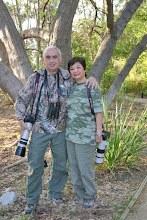
Whenever my wife and I go birding abroad we regularly search the internet first to find out possible places where we could stay and birding areas we could visit. We are what could be termed as "budgetarians" when it comes to traveling overseas. Which basically means we don't avail the services of professional bird tour companies. We pretty much do stuff on our own. That said, here are some information on our experience in Ecuador:

Accommodations:

Puembo Birding Garden ( https://puembobirdinggarden.com/ ) is a cozy place not far from the international airport. Mercedes, the owner, really made us feel at home. Being an expert birder herself, she recommended the places we should visit and even provided a driver/guide for us. As the name implies, the place has a garden where there are feeders for hummingbirds, seed-eating birds and fruit-eaters. Scrub Tanagers, Eared Doves, Rufous-collared Sparrows and Black-tailed Trainbearers are sure sightings here.


Sachatamia Lodge ( http://www.sachatamia.com/ ) is another favorite of birders. It has a main building with rooms upstairs and also several cottages within its property. They also have feeders for hummingbirds and fruit-eating birds. The forest and waterfalls hosts many different kinds of birds. The cuisine at the restaurant is quite good. A little bit of quirkiness is that you have to remove your shoes and put on a cloth covering on your feet before entering the main building which houses the office/concierge and the restaurant.


Birding Places:

Alambi Cloud Forest Reserve ( http://www.alambicloudforest.com/) is a hummingbird heaven about an hour away from Quito. There is an entrance fee of $5 per person.


Bellavista Reserve and Lodge ( http://www.bellavistacloudforest.com/ ) really is a lodging place and is favorite stop over of tours and birders. It is located in the Tandayapa Valley which is famous as a top birding destination. We just did a short visit here and purchased the birds of Bellavista book.


San Tadeo Birdwatching (they don't have a website) is a comparatively new and small birding spot not far from the Sachatamia Lodge. It is famous for the various kinds of tanagers and hummingbirds that come to their feeders. The entrance fee is $5 per person.


El Mirador Rio Blanco ( https://www.faintlake.com/trips/EC/Mirador.html ) is a restaurant and hostel that caters to birders. Patricio, the owner, is an avid birder himself. Food is good in this place with good views of the feeders.


Milpe Bird Sanctuary (they don't have a website but a good resource is here: http://www.exoticbirding.com/ecuador/milpe-sanctuary/description.html )
Entrance fee here is $12 per person. Inside the sanctuary are several trails which harbor bird species of lower elevation forests. The road going to/from the sanctuary is also rife with birds.

Refugio Paz de las Aves   ( http://www.refugiopazdelasaves.com/ ) is internationally known to birders. Here sightings of the Andean Cock-of-the-Rock is guaranteed. Seeing four different species of Antpittas is also a strong possibility. The entrance fee is $35 per person.


Antisana Ecological Reserve is a huge grassland with a lake high up in the Andes. It has an elevation of more 3500 masl.  Again they don't have a website but here is an informative link http://www.exoticbirding.com/ecuador/antisana/description.html . Located inside the Antisana Ecological Reserve is the Tambo Condor Restaurant. This is the best place to observe the Andean Condor. Food is not bad too.


Transportation:

The airline we used was Copa. It has a stopover in Panama City which we availed by staying one extra day to do some birding in Panama.

Our transportation had been provided by the lodges we stayed in for a fee. Puembo Birding Garden was responsible for picking us up and taking us to the airport. They were also the ones who contacted Luis, who did not only drive for us but acted as our bird guide as well. Sachatamia Lodge provided the car and driver to take us to the Refugio Paz de las Aves.

Summary:

Apparently the last half of April was the onset of the birding off-season. Mercedes of the Puembo Birding Garden admitted to us. Rain had been pouring almost on a daily basis thus limiting our birding outings. It could also be a factor but it was holy week when we came to Ecuador and it being a predominantly Catholic country, such a time was devoted to spirituality. Maybe that was why the fruit feeders were not replenished the three days we stayed at the Sachatamia Lodge (which included both Maundy Thursday and Good Friday).

All in all it was still a productive trip for us, adding about 100 new species to our lifelist. Big thanks goes to Luis our driver/guide and excellent spotter.

Sunday, May 07, 2017

Birding in Ecuador - Day 6 - Andean There Were Birds

When our host, Mercedes, suggested we go to Antisana on our last full day in Ecuador so we can see Caracaras and Ibises, we politely declined. Our excuse (which was really lame) was that we were exhausted. "We'll just bird around your neighborhood," we told her. We returned to our room while she prepared our dinner. I gave it much pondering and the thought of garnering more lifers persisted on my mind. I discussed this with my wife. While having dinner, we told Mercedes that we changed our mind and please contact Luis so he can pick us up tomorrow.

Bright and early the following day as we were about to embark, Mercedes noticed that we only had three layers of clothing on. "You will need more than that" she said. Then she quickly rushed to her house and brought two sweaters - one for me and one for Cynthia.

The road to Antisana was quite birdy. Thanks to Luis' keen eyes we got Paramo Ground Tyrant, Plain-colored Seedeater, Chestnut-winged and Stout-billed Cinclodes, and Plumbeous Sierra Finch. These were all added to our life list, among others.

One of the highlights was the Carunculated Caracara. There were lots of them walking on the grassland.


As we approached La Mica Lake, one could say: And then there were birds....most of which had their names begin with "Andean":

Andean Coot


Andean Teal


Andean Duck


Andean Lapwing


Andean Ibis


And the most memorable of all:

Andean Condor


To cap an already exciting trip, Luis' sharp eyes gave us our final lifer: the Red-crested Cotinga.


When we returned to Puembo, we thanked Mercedes profusely not just for insisting that we go to Antisana but also for providing an extra layer of clothing for us. It was indeed very cold up there almost to the point of freezing. After all, we were more than 3500 meters above sea level high up in the Andes mountains.

It was an awesome end to our birding trip to Ecuador.

Saturday, May 06, 2017

Birding in Ecuador - Day 5 - Milpe Way

Today we will be transferring from Sachatamia Lodge into the Finlandia Hotel in the city of Quito. This is so that we can be close to the church where we will be attending the Easter Sunday Service tomorrow. We had already arranged with our expert driver/guide Luis to pick us up and take us to the capital city.

Our first stop was at the Milpe Bird Sanctuary. Being short on time and energy (we're senior citizens after all) we did not explore the lenghty trails. Nevertheless we had some good views of two kinds of Toucans that looked similar to each other - the Choco and the Yellow-throated.

Choco Toucan
Yellow-throated Toucan
We also had some surprises - we didn't know what they were until I was already home and doing some digging in the internet. What we thought was just an oriole that we've seen before turned out to be a lifer!

Yellow-tailed Oriole
And then there was this bright reddish brown bird that kept displaying on the branch above us. It was a Cinnamon Becard - a totally unexpected encounter.


Near the office were the usual feeders. One of the hummingbirds that go there was new to us - the Green Thorntail.


From the sanctuary we proceeded to our destination: the El Mirador Restaurant to have lunch. That strip of road that we traversed was quite productive bird-wise as we added more lifers to our list. Among them was the Masked Water Tyrant - a kind of flycatcher that stays mostly on the ground.


A similar terrestrial bird with a strange name was the Pacific Hornero. The term "hornero" was derived from the Spanish word "horno" which means oven. That was because the nests built by this species were shaped like wood-fired ovens.


Another bird with a quaint name was the Black-crowned Tityra. The word "tityra" was derived from the name given to the satyrs in Greek mythology who were known for their raucousness - a trait that this species definitely has.


Then we had the all-black Smooth-billed Ani. "Ani" was adapted from the Tupi (an ethnic tribe in the Amazon) which means "social" - an apt description for the habits of this bird.


At El Mirador, we were welcomed by Patricio, the owner, who is a bird lover himself. Beside the dining place were feeders where tanagers and hummingbirds were plentiful. After lunch we birded the surrounding area and got the female Red-headed Barbet.


Although not a lifer, the Lineated Woodpecker gave us good views.


The star of El Mirador was the very active Bananaquit.


Before we left we were honored to have met Hal & Pat Michael who were members of a foundation responsible for the conservation of birds in Ecuador.

Then it was a long drive to the city of Quito. Again we thanked Luis for being such a great bird spotter. Tomorrow we will see him again when he will take us back to Puembo where we will be staying for our last two days in Ecuador.

Friday, May 05, 2017

Birding in Ecuador - Day 4 - Rock On!

Refugio Paz de las Aves is an internationally renowned birding place in Ecuador. No self-respecting birder would go to this country and not visit the Refugio. The owners, Angel and Rodrigo Paz, are reputedly the Antpitta whisperers. At least three species of Antpittas inhabit their property and these birds usually appear at their beck and call. Another "guaranteed" sightings are the unbelievably gaudy-colored Andean Cock-of-the Rocks.


 It was unfortunate that our visit to the Refugio was a little short of our expectations. The heavy downpour was basically the reason for that. Thankfully the day started well. Early in the morning we headed to the "lek" to watch the fabled Cock-of-the Rocks. They were there all right, albeit far even for my zoom lens. As the sun rose higher, the gorgeous birds flew closer and displayed their beauty to a group of awestruck bird photographers.


From there we moved on to where the Antpittas were. It took a lot of prompting from Rodrigo before the Yellow-breasted species came out.


It took even longer to coach the Moustached Antpitta to show itself before the expecting birders.


And then it rained. That signaled the end of our trip.

Thursday, May 04, 2017

Birding in Ecuador - Day 3 - Such a Time We Had

This day we birded the grounds of the Sachatamia Lodge where we were staying. Prior to our trip to Ecuador we already researched the quality of birding that can be experienced here. It was quite promising! 

Now we were enjoying it first hand. This despite an occasional shower and the feeders not replenished by the hotel staff. The leisurely walk around the area garnered 15 more lifers for us. One of the challenges of birding in Ecuador was identifying the various kinds of Treecreepers. These birds have practically the same rufous-brown plumage and the same habit of creeping on the trunks and branches of trees (hence their name). Here are a few samples:

Montane Woodcreeper
Stout-billed Woodcreeper 
Tyrannine Woodcreeper
The other highlight of the day was when we chanced upon a Birding Tour Guide showing a group of lady birders a Guayaquil Woodpecker not far from our cottage.


Then while we were relaxing by the parking lot we saw one of the target birds in this area - The Red-headed Barbet.


Yesterday our driver/guide, Luis, told us to look for the resident owl. So we asked Joni, one of lodge's staff if such bird still inhabits the area. "Yes, it comes around 7 at night," he assured us. That evening we ventured out in the dark from our cottage hoping to see the nocturnal bird. As we neared the main lodge we heard the loud screams from a nearby tree. Cynthia called Joni who then came with a flashlight and shone it on the Black-and-white Owl.


It was a relaxing birding day for us and we had such a wonderful time seeing more lifers. 

Wednesday, May 03, 2017

Birding in Ecuador - Day 2 - Luis' Lane

On our second day we will be checking in at the Sachatamia Lodge which will be our "home" for the next three nights. Mercedes, the owner of the Puembo Birding Garden where we stayed the first night, suggested we should go birding on the way to Sachatamia. "I know the perfect guy who can drive you to your destination and even take you to the birding spots along the way," she offered. Early morning of our second day, the said driver, Luis, was already waiting for us.

"Our first stop would be at the Alambi," he said. Alambi Cloud Forest Reserve was indeed a must-see place for birders. It is a hummingbird heaven!

Fawn-breasted brilliant
Purple-bibbed Whitetip
Purple-throated Woodstar -female
Booted Racket-tail
Brown Inca
Brown Violetear
From there we did a short stop at Bellavista Lodge - another famous lodging area in the Tandayapa valley.

Buff-tailed Coronet
Blue-winged Mountain Tanager
After lunch at the town of Mindo, we proceeded to another birding stop-over - the San Tadeo Birdwatching. Whereas Alambi was noted for its hummingbirds, San Tadeo, on the other hand, was famous for its tanagers.

Black-capped Tanager
Golden-naped Tanager
Flame-faced Tanager
Black-chinned Mountain Tanager
Golden Tanager
Lemon-rumped Tanager

Finally, we arrived at Sachatamia. We settled in our cottage and then surveyed the surrounding area. And got good looks at a Masked Trogon.


We said goodbye to Luis. He was technically a guide because he is familiar with the roads, trails, paths and lanes of the birding spots. He even knew the owners of those places personally. Not only that he is an expert on local birds. Before leaving he said, "Look for the owl at the parking area at night."

However, we were so exhausted that as soon as we returned to our cottage, we were out like a rock.