Showing posts with label marsh sandpiper. Show all posts

Sunday, October 27, 2019

Candaback

After a rather long hiatus from  birding, my wife and I decided to return to our hobby. The place we agreed to go back to was the Candaba wetlands. The last time we visited this place was in early January of this year. We were disappointed that time having photographed a total of only 13 species. We hoped we would be luckier this time.

The very first bird we encountered was the Purple Heron. As it turned out this would be the bird of the day - having encountered it at different places.


As I negotiated the challenging deeply rutted dirt road, we were frustrated by surprising skittishnesss of both the Zebra Doves and Red Turtledoves. We would see them feeding on the grounds ahead of us but everytime we stopped to take their photos they would fly away. And this happened a lot of times! Rather surprising because in our previous trips here both species would remain on the ground unperturbed by our presence.

At least one of their cousins, a Spotted Dove, posed long enough for us to be able to take a shot at it.


The area near the entrance was a fallowed farmland and completely devoid of avian population. As we neared the "wetlands" the Whiskered Terns were as usual flying around. Again, we only saw a few individuals where there used to be hundreds of them before.


Good thing a family of Common Moorhens were out searching for food.


We also encountered three species of bitterns but only managed to get photos of two: the Cinnamon and the Yellow. The Black Bittern made a quick flyby, landed on a clump of tall grass and completely disappeared from view.


Cinnamon Bittern
Yellow Bittern
A White-breasted Waterhen walked across the road and stopped just before going in the shrub.


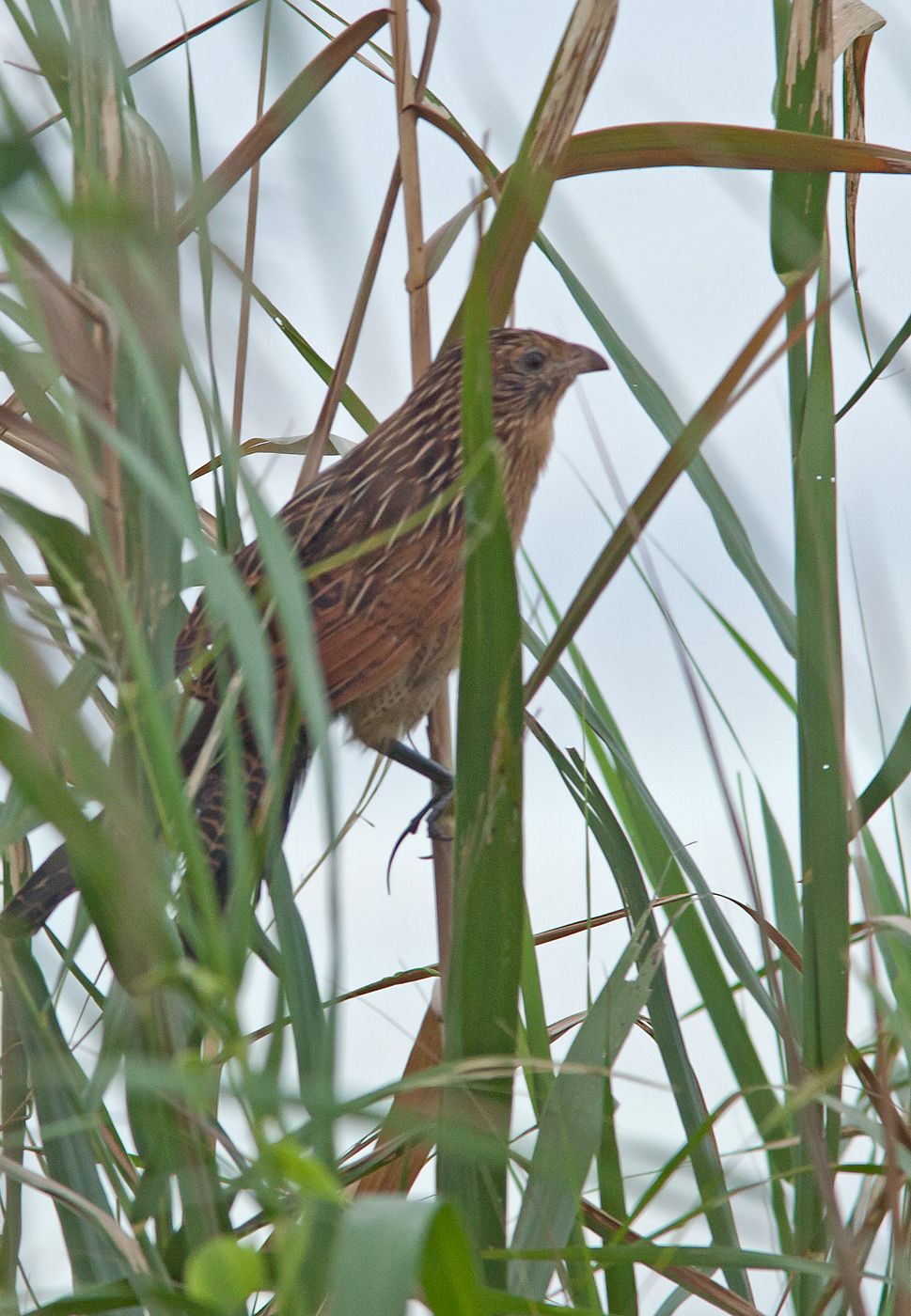
A little further up the road, Cynthia noticed some movement by the tall grass. "Coucal!" she said softly. Unfortunately, the large bird skulked behind the reeds and never showed itself in full view.


As we approached the pond which was now almost dry, we were glad to see several members of the Ardeidae family: the Cattle Egret, Little Egret, and Intermediate Egret. 


Cattle Egret
Little Egret
Intermediate Egret
Since there wasn't that much water the colony of Black-crowned Night Herons was no longer there. Actually we were surprised when we saw one juvenile fly over.


When we were just about to get to the "mayor's house" I noticed that the ruts on the road was definitely not accessible, especially since our car isn't a 4-wheel drive. So we thought it prudent to just turn around.

At the provincial road, we got photos (and not so good ones even) of two of four regulars usually seen here: the Striated Grassbird and the Long-tailed Shrike. Unlike before, the Pied Bush Chat and Chestnut Munias were too far off for us to even get a decent shot.


Striated Grassbird
Long-tailed Shrike
After about 3 hours we decided to call it a day. A few meters down the road I saw some waders in the shallow waters. Let me just say that we got some bonus albeit all photos were only of the "documentary" type inasmuch as our subjects were too far off from the roadside. At least we know that some migrants such as the Marsh Sandpiper, Wood Sandpiper, Black-winged Stilt, Long-toed Stint and even a Little Ringed Plover still come to this place.


Marsh Sanpiper
Wood Sandpiper
Black-winged Stilt

Long-toed Stint
Although we got better results now than we had early this year, it was still heartbreaking that the number of species and the quantity of birds had declined sharply this year.

From our home to this place took us about an hour-and-a-half when we left at around 4:30 in the morning. The return home took almost five hours as we had to endured the horrendous traffic situation in MetroManila, particularly along EDSA. It was such a traumatic experience that we probably would never come back to Candaba again.

Monday, December 01, 2014

Missed Purple Mystery

The last time we saw it was in April, 2011. We've been to Candaba lots of times since then and we never even had a glimpse of it. "Isn't it a bit mysterious that the once very confiding Purple Swamphens were now nowhere to be seen?" I told my wife. Cynthia couldn't agree more. "It's been more than three years and we missed seeing this bird!" she confirmed.

Saturday we were back at the popular birding site in Pampanga, once again hoping that we would see our long lost target species. It was a beautiful sunny morning and the usual denizens of the wetlands were up and about. A male Pied Bush Chat was shaking off the dews from its feathers.


A Clamorous Reed Warbler was living up to its name climbing to the top of the bush loudly announcing its presence.


As we entered via the "back door" to the marshy area, Black-winged Stilts and Sandpipers (Wood and Marsh) were beginning their foraging for breakfast.


Black-winged Stilt
Wood Sandpiper and Marsh Sandpiper
Of course, this time of the year, the migrant Common Kingfisher was a sure sighting here.


Surprisingly, ducks were scarce. Only a few Philippine and Wandering Whistlings were present. Luckily, there was a single (yes, just one), where there used to be hundreds of them, Tufted Duck. I said, luckily, because this was the first time I was able to take a decent photo of this annual visitor.


The hours passed. The absence of the usual migrating species was saddening. There were some Grey and Purple Herons but they preferred to stay at a distance, with one exception.


Purple Heron
It was nearing 10 am and the blue skies were now slowly being covered by grey clouds. We were already on our way out when Cynthia suggested we linger near the junction of the road from the mayor's house. My wife walked a hundred feet or so and stared at the wetlands before her. I was scanning the edges hoping to see a Black Bittern. "Purple Swamphen!" my partner suddenly yelled. "But it flew away already!" I walked over to where she was and she showed me a photo of our hoped for bird, flying indeed. 


"Maybe it will come back," my wife said assuringly. We switched places. I stayed where we were and she went to look for Black Bitterns. Perhaps it was about half an hour when I saw something purplish emerged from the tall vegetation - but only oh so quickly - returning once again in the deep brushes. I managed to take a few quick shots before it completely disappeared from view. 


When I told Cynthia about my fleeting encounter she was happy that finally we both saw the purple bird that we missed seeing since 2011. A soft drizzle signalled that it was time for us to go. It was amazing that it decided to wait until we both have seen our target bird before the rain started to fall.

Monday, October 21, 2013

It Was a Ruff Day

Even before we reached the Candaba Wetlands, we already saw the Ruffs. Three individuals, at least. Relatively close too! 


Seeing an uncommon migrant right off the bat, so to speak, seemed to augur well for the rest of our birding day. However, things turned out differently. The road to the sanctuary was still muddy and not passable, and some parts of the fields were still flooded from the recent rains. There were redeeming moments, of course, like when a pair of Pied Bush Chats landed just a few feet from our vehicle.


But for Peter, my wife and myself, our hopes of seeing a lot of winter visitors and perhaps even a lifer somehow got dashed. Our friends, Irene, Rob, Kitty and Mark, who arrived earlier told us that there were Sharp-tailed and Curlew Sandpipers at the fallow fields. We hurriedly went to the place they referred to, traipsing through some mucky trails and found plenty of birds. Except that they were so far that we were not able to distinguish one bird from another. That their colors perfectly blended with the freshly tilled soil made it even worse. The only exceptions were an unusually curious Marsh Sandpiper...


...and an equally bold Long-tailed Shrike.


Aside from these, the birds that we saw at the Wetlands were mostly Egrets - lots of Little, a few Intermediate, and even fewer Great. Wood Sandpipers were everywhere.


Black-winged Stilts were quite plentiful too.


By eleven, the weather was already hot and humid with the sun mercilessly beating on the poor birders below.

On our way out, we once again saw the triumvirate of Ruffs at the same place they were earlier. 


I'd say it was Ruff from beginning to end.