Showing posts with label lifer. Show all posts

Sunday, February 04, 2018

It's Where Avilon

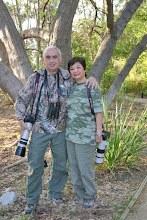
The Avilon Zoo in Rodriguez, Rizal had been hosting some uncommon migrants lately. Last October a pair of Chestnut-cheeked Starlings stayed there for some time. Late January of this year, local guide Mhark Gee posted a photo of a Chestnut-winged Cuckoo, taken at the zoo premises. That of course triggered an onrush of bird photographers to Avilon. My wife and I, along with our friend, Peter, were part of a group that went on Saturday, Feb. 3rd.

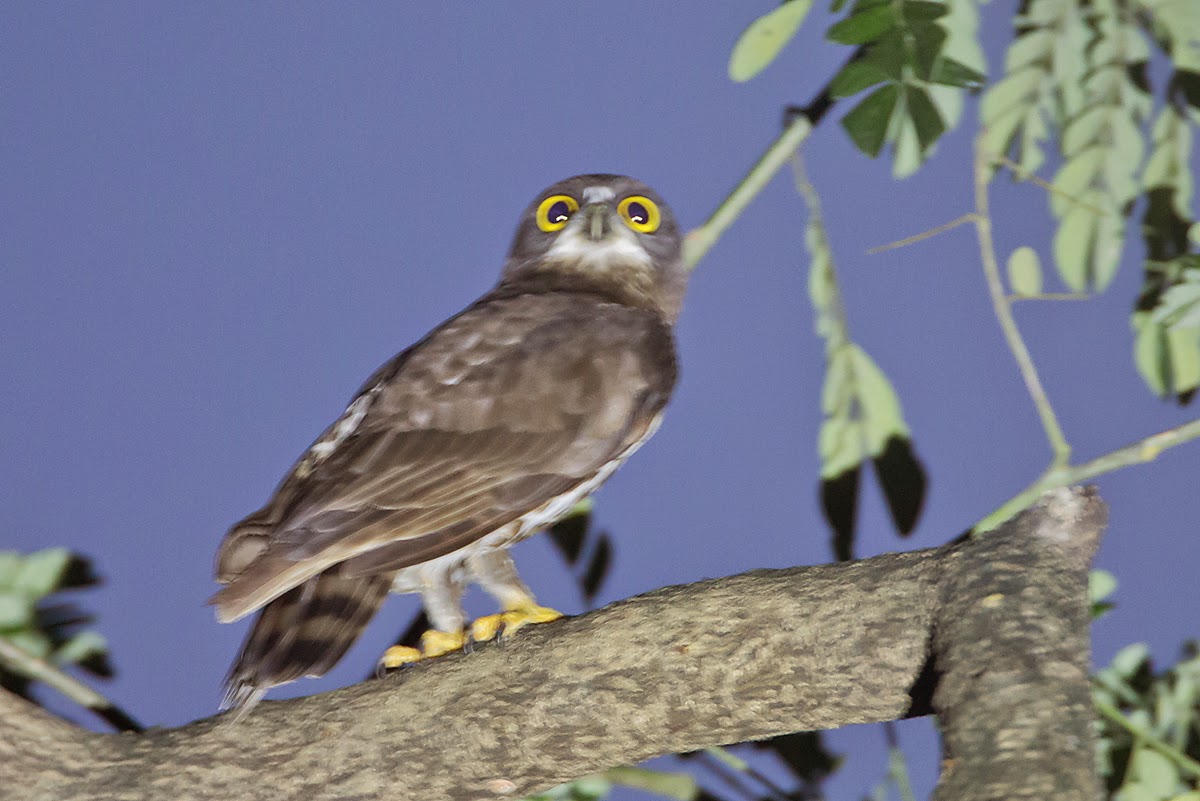
Majority of us arrived a little before 8 am. After more than an hour of waiting, the hoped for cuckoo was still a no-show. Then the local Besra came flying in and teasingly flew from tree to tree. Cynthia was quicker with her camera and got a shot of the raptor.


Time slowly passed and still our target bird was nowhere in sight. As if to relieve the building tension among us, a Common Kingfisher visited the nearby pond and hunted for food, giving us photographers some FIM (food in mouth) shots.


Not long afterwards, its endemic cousin - the Indigo-banded Kingfisher - obligingly posed for us as well.


Then Mhark told us that another cuckoo, the Rusty-breasted one, was at the trees near the parking area. Now this was one very cooperative (and I'd say somewhat narcissistic) bird, as it gave us different poses like a model.


At noon we decided to join our fellow birders who were already having lunch at the restaurant area. That was when Mhark shouted, "It's here!" What followed was a frenzied shooting by 16 excited bird photographers of the awesome looking cuckoo. For about an hour, this beautiful migrant made all of us go cuckoo. It was the three of us (me, my wife and our friend, Peter) who gave up as we were already feeling the pangs of hunger. We were all happy that we got our first lifer of the year.
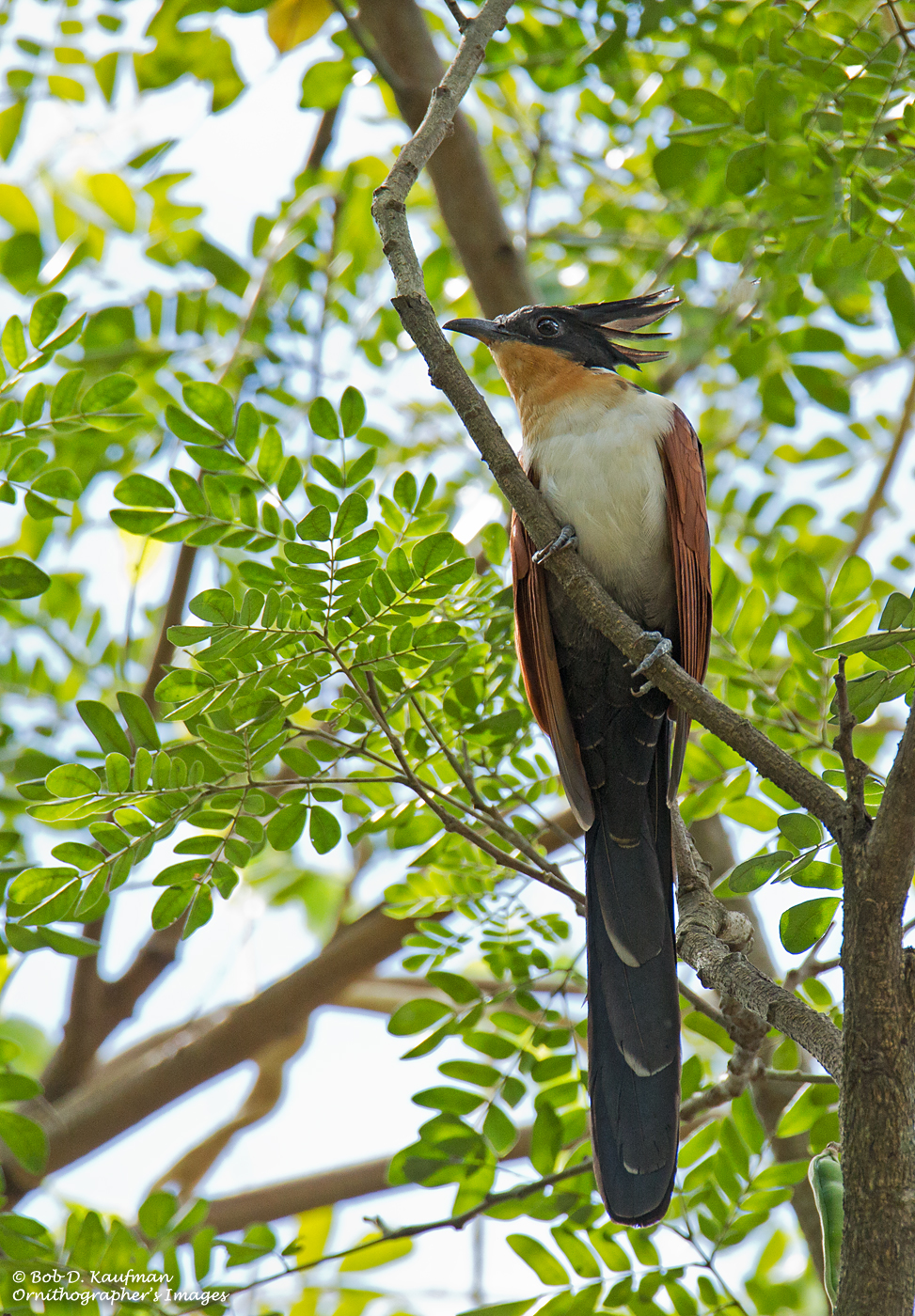


Because of the two chestnut migrants (the cheeked starlings last year and the winged cuckoo this year) the Avilon Zoo had become one of the interesting local birding destinations. Hopefully more will come even those without "chestnut" in their name.

Monday, January 23, 2017

Third Time's a Charm

Two times I went to La Mesa Ecopark to look for the Luzon Hawk-Owl. Both times I failed. That was on a Tuesday and a Saturday. Then on Sunday afternoon fellow bird photographer Jonn Salvador posted a shot of the said species in Facebook. I immediately texted local bird expert, Anthony Balbin, asking him if the owl was still there. Yes, he texted back. It was 4 in the afternoon. I quickly consulted the Waze app to see how long it will take to get to the Ecopark. About 50 minutes it said. Without even bothering to put on our birding shoes, Cynthia and I jumped to our car and rushed to the park. An hour later we were at the mini-forest. Soon Anthony came and showed us where our target bird was perched. It was farther up now than where it had been previously sighted. The skies were gloomy, dusk was fast approaching, and the Hawk-Owl was beneath a huge palm leaf. Not the best circumstances for good photography. Nevertheless, we tried. Then the owl turned its face away from us. Prof. Reuel Aguila, who also joined us, and I, tried to negotiate the incline so we could get better views. Finally a tiny opening in the foliage allowed us to photograph our lifer at an angle we had hoped for. I quickly reviewed the results of my endeavor and was glad that at least a couple of shots were acceptable.


Satisfied that we had accomplished our mission we joined our birder friends who were hanging out at Mang Jose's restaurant. We heartily thanked Jonn and Anthony without whom we would not have been successful in getting our first lifer of the year. I told our friends Wins Tornado, Ed Santos, Gilbert and Wilma Go, Albert Tamayo, and Jonn, Prof. Reuel and Anthony of my two earlier unsuccessful efforts at finding the owl. But the third time's always a charm, I said smilingly.

Sunday, March 06, 2016

Much Bee-eater There

What started off as a lemon ended up as lemon pie a la mode. 

It was one of those bumpy beginnings of an early morning birding. As we entered the Nabasan trail in Subic we saw our friend and topnotch bird guide Nicky Icarangal. He was showing several foreign birders the local avifauna. After the greetings, Nicky told us that they had just seen some Rufous Coucals and they were now going after a Rough-crested Malkoha. While I and birding companions Peter and Wenxing were still setting up our gears, my wife got a glimpse of the Rufous Coucal. A glimpse and some really bad photos.

Other than an attention-starved Black-naped Oriole who kept calling overhead and a flitty Balicassiao, no other members of the avian species were seen. Nicky then called us saying that they have the Malkoha on sight. By the time we got to where they were, only a few strands of the red-crest were visible.

With Nabasan disappointing us, we all agreed to try the Botanical Garden area and maybe see the elusive White-fronted Tit. 

The tall, leafless tree that hosted about a dozen species last month now only showed a pair of Whiskered Treeswifts. There we met our friend Bim (who was with us that lucky February day) along with his wife, Gina and birding pal, Cris. After a while Bim and company decided to take a steeper trail. Since Peter and I were carrying heavy gears, we thought it would be prudent to forego the hike and just continue birding in the area around the Botanical Garden.

Here we saw a nesting Coleto. Then we began seeing green. I got the endemic Philippine Green Pigeon as it dove (no pun intended) from a high branch.


The Green Imperial Pigeon (which actually is more greyish than green, but then there is also a bird named Grey Imperial Pigeon) however remained high in the towering tree.


Of course, the White-fronted Tit was again a no-show.

Back in Nabasan, our misfortunes began to turn around as we saw a male Luzon Hornbill enjoying some fruits.


Near the exit, a Blue-naped Parrot popped into view.


We saved the best for last. We knew that this is the nesting season of the Blue-throated Bee-eaters. Off to Cubi Point we went because the bee-eaters were there. By the roadside were dozens of this colorful insectivores. 


We did one more stop at the area near the Jest Camp. We were rewarded by more views of another male Luzon Hornbill. Some sort of icing on the cake.


Although at the start our birding day was not as successful as we had hoped, the ending was definitely satisfactory. Especially at Cubi where the bee-eaters were nesting. It was much better there.

Oh, I almost forgot. I got a lifer too! It was at the Botanic Garden area. While I was staring at the blue skies I noticed some swifts that were bigger than the others flying above. The wings seemed a bit different too. I took a "documentary" shot. At home I looked at the picture and was ecstatic to discover that my hunch was right. Got myself a Purple Needletail!


Monday, November 17, 2014

Island in the Fog - Part I of our Baguio Trip

The sweet smell of pine trees wafted by the cool mountain breeze filled the air. We were in Baguio City, a tourist mecca nestled high in the Cordillera mountains some 270 kilometers from Manila. It was Friday afternoon. After checking in and enjoying the sumptuous lunch buffet at Baguio Country Club, we basked in the nippy weather as we waited for our friend and local birder, Jocelyn (henceforth referred to as "Jho").

At 3 pm, she came running - literally - towards us having just finished a meeting at the school where she works. Inasmuch as Jho had a scheduled trip the following day and therefore would not be able to go birding with my wife and I, she promised to show us the places where we could go on our own tomorrow. As we passed by Camp John Hay she pointed out the trails where she said the wave of birds would pass. "The time of day does not matter," she explained, "there will always be a wave. You just have to wait for it".

Some 40 minutes later we were negotiating the steep road to the summit of Mt. Santo Tomas. As we passed by a "landslide" she indicated that this was where the crossbills come in the morning. Near the end of the road, we parked the car and walked, or rather "trudged", the rest of the way. "This place is the home of the Mountain Shrike and the Fire-breasted Flowerpecker," Jho informed two out-of-breath senior citizens. Unfortunately, both species were not present that time. 

It was nearing five in the afternoon and a thick fog was starting the envelop the mountain. We all agreed that it was time to go. While walking towards our car, Cynthia suggested I turn around where the incline towards the top began. I argued that I can make a u-turn right where we were parked. I don't know why but when I started the car something within me just urged me to follow my wife's proposition. As soon as I made the turn I saw a bird move in the tree right in front of us. "There's a bird there!" I told my companions. The bird then flew down to the vegetable garden below.

"Island thrush!" Jho exclaimed and jumped out of the car. Cynthia immediately followed. I had to park the car properly, get my gear out of the bag before I was able to join them and hoped the bird would still be there. No worries though as Jho pointed to a black bird foraging for insects in between rows of cabbages. Somehow the fog slowly lifted and the sun shone brightly. The thrush paused from its meal hunting and posed for us. It was a lifer for Cynthia and myself.


While the two ladies were still having the time of their lives photographing an extremely cooperative thrush, I saw a light-colored bird at the other side of the road. It looked different from any I've seen before. Slowly, I approached it all the while trying to get a picture (which was not easy because it was quite small and blended perfectly with its surroundings). Up until now I am still unable to put a proper identification to this bird. 


Satisfied with our encounter with the Island Thrush (and the unknown bird), we moved on. Down the road, Jho shouted, "Mountain Shrike!" I stopped. Once again our friend was out and was pointing to a brown bird sitting smugly on a low shrub. Before I could raise my camera to my eyes, it flew. Jho and I tried to follow where we thought it alit but it was not there. Nor anywhere else in the vicinity.

Back in Baguio City, we said goodbye to our friend and thanked her profusely for showing us where to find the birds in her stomping grounds. Tomorrow we plan on going back to this place early in the morning and then try the eco-trails later in the day.

Update: The unknown bird turned out to be a Paddyfield Pipit. Thanks to Rob/Irene and Choi Way Mun for the ID.

Thursday, September 25, 2014

Owl Boobook

It was a little after six pm. Darkness had already fallen. With sighs of disappointment we all agreed to terminate our vigil. I lifted my tripod and with a smidgen of hope looked up to the trees. An object suddenly landed on a branch. What object that size would land on a branch at this time of night - was the thought that filled my mind. 

"I think that's the owl" I cautiously informed our group.

 Jops' sharp eyes focused on the object.

"Boobook! Boobook!" he yelled excitedly.

What happened next was a frenzy. All I remembered was that someone shone a torch at the bird and I just kept firing away.

Our friend, Peter, discovered the presence of a Chocolate Boobook, interestingly enough, in an urban environment. Of course, Cynthia and I wanted to see this Philippine endemic, not only because it would be a lifer for us, but also because it is quite uncommon. As a matter of fact the status of this species was declared "near-threatened" by the IUCN (International Union for the Conservation of Nature) due to "fragmentation of lowland forest habitat".

Together with friends Jops and Maia, we staked out the area where the small owl was seen (and photographed) just the day before. Crepuscule turned into evening and still we have not seen even a glimpse of the object of our hopes. It was when we decided to terminate our vigil that we were finally rewarded with views of the elusive night predator.

When I reviewed my photos the following morning, I was heart broken. All of my shots were blurred!


Just like the Terminator all I can say is….

"Owl Boobook!"

….or words to that effect.


Sunday, July 21, 2013

Going Back

Dark ominous clouds covered the skies. Peter inched his car up the mountain road. The three of us were silent, our moods reflecting the gloomy morning. A few kilometers later, the lazy Phoebus finally awoke and peeped through the gray blanket and filled the heavens with a bright promising light.

For Peter, Jelaine and myself, this was our return to birding after a long hiatus. For Peter it was work that kept him from enjoying the hobby we all share a passion for. For Jelaine it was school. For me it was shameful lethargy brought about by the fickle weather where rainfall was as unpredictable as the flight of a swift.

But now we're back. 

Throughout the day the sun played hide-and-seek among the empyrean cotton balls. In spite of the golden orbs playfulness we managed to see most of the birds we hoped to see. And then some.

It was during one of those moments when the sun was behind a cloud that Jelaine saw it. Peter stopped the car and took pot shots at it, while the non-photographer young lady with us described the bird while peering through her binoculars. I jumped out of the car, camera in hand, and looked at where they were pointing at. And saw movement. Two objects moving in the darkest part of the understory. For the life of me, I just couldn't even tell what I'm looking at. They were birds alright judging from their movements but that's just about all I could distinguish. For me they were just two pale patches dancing in the dark. 

After the birds were gone, Peter showed me the pictures he got and once again I couldn't figure out anything. Now I will have to admit the fact that my almost 67 year old pair of eyes aren't what they used to be. I am most certain this condition was aggravated recently by my constant staring at my computer for most of my waking hours. I blame Facebook for that.

Back at the mystery birds, from the description given by my birding mates and based on the habitat we saw them, my guess was that these were a pair of Spotted Wood Kingfishers. Peter confirmed it later that night after he had processed his photos.

We didn't know it at that time but it wasn't long after this encounter that we would be getting a lifer. All three of us were standing at the side of the road hoping to see a bird. Any bird. It was then that a low flying raptor appeared above us. Slowly like a windblown kite it thermalled higher and higher until it became a mere dot in the now blue sky. That evening when I showed the picture to expert birder, Desmond Allen, he confirmed what I had hoped it was - a Philippine Hawk Eagle.


Seeing a Whiskered Treeswift at Mt. Palay-palay is almost guaranteed. Sure enough, there was a lone male performing its insect-hunting routine.


Another surprise came further up the road. What we thought were not so uncommon Barn Swallows turned out to be a mother Striated Swallow feeding its fledgling. A few Pacific Swallows watched the whole procedure with seemingly genuine interest not that far alongside.


When the big bullying White-breasted Wood Swallows came each and every swallow got off and hurriedly left the electric wire they were perched on.


Continuing on our journey, we all saw a dead bird on the road. As we got near I identified the poor thing as a Plain Bush-hen. It would have been a lifer for both Peter and Jelaine, but since it was dead, they will just count it as a "deather".

Another sure-to-be-seen bird in this neck of the woods is the Philippine Falconet. At first we were worried because we did not see this tiny raptor at the place where they are usually seen. 

"Don't worry" I assured my friends, "we'll see it on our way back." "Remember the last time?" I reminded Peter of our previous trip here. 

As we were going back down the winding road, I pointed a small bird to my friends. We finally saw the falconet at a time when dark clouds again turned the skies to a somber gray.


As the morning wore on and the weather turned less favorable we all agreed it was time to leave. But first, lunch beckons.


Saturday, December 08, 2007

Dip and Luck

Any self-respecting Southern California birder would naturally want to see the Roseate Spoonbill hanging around the Santa Ana river in Orange. I still got some little self-respect left so despite the fact it had just rained, I joined the flock of eager birders Friday morning to look for the rarity. I'll make it as quick and as painless as possible. We dipped.

All the hopeful chasers left at around 11 am. It was just my friend, Raul Roa, and myself who remained. We looked at each other and agreed that we should give up as well. I gave Raul directions to Peter's Canyon so that he can save the day by photographing the friendly resident Roadrunner there. I hoped to save my day by going to San Diego Creek behind the Irvine Civic Center parking lot and photograph the Wilson's Snipes seen there.

Wilson's Snipes would be a lifer for me - all I have to do is find them. I quickly surveyed the creek which was flowing furiously after last night's downpour. There were some gray-streaked birds foraging for food by the creekside. Could they be...? Binoculars said they were Lesser Yellowlegs. I went a bit upstream where a lone Cormorant was drying itself. As I came closer, a duck-like bird with red head that seemed to have a bad-hair day plopped into the water. Binoculars said it was a female Common Merganser! Despite it's name, Common Mergansers are not that common in Southern California waters, particularly in a fresh water creek.


Thrilled by that discovery, I ambled downstream to search for my original quarry. I focused on a suspicious looking clump of twigs in the middle of the creek. Something moved! A Cinnamon Teal. Slowly, I scanned every bit of vegetation and other detritus accumulated by the flowing waters. I'll make it as quick and as painless as possible. I got my lifer. Lifers, actually, for there were about six or seven of them.

Monday, November 05, 2007

A Short Story and a Long Tail


I can't believe I went 10 days without birding! Was my passion for birds waning? Heaven forbid! A few factors contributed to this pause in my birding activities: High price of gasoline (please realize that I am currently jobless), no reports of any unusual sightings within my comfort radius of driving, entertaining Cynthia's daughter and her family who were visiting from the Philippines, and, I'm quite embarassed to admit, sloth.

But, when news that a Long-tailed Duck was seen at Bolsa Chica, the spirit of twitching awakened in me. Undeterred by the heavy fog on Saturday morning, we proceeded to Huntington Beach. A gang of photographers brandishing a variety of lenses that would put Ritz Camera stores to shame were already making negotiating the boardwalk a test in personal maneuverability. With Brown Pelicans putting on a show, dive bombing for fish just a few feet from the railings, and Forster's Terns zooming overhead, ducks were the norm of the day - and I do not mean those birds swimming and calling "quack, quack" - I meant avoiding getting whacked in the head by swinging 12-pound lenses.

Despite all these, nobody seemed to know that a rare duck (the swimming bird) was present in the area. We left the swinging bunch and proceeded to take the trail alongside PCH. While we were trying to look at some White-crowned Sparrows, a gentleman and his son greeted us with "If you're looking for the Long-tailed Duck, you can find it north of the Tidal Gate". We gave them our heartfelt thanks and wasted no time getting to the place referred to.

At the tidal gate, we saw nothing but Lesser Scaups and Surf Scoters with a couple of Buffleheads completing the group. No Long-tailed Duck. We went to the mesa to get a more panoramic view of the lagoon below. We saw Northern Pintails and American Wigeons, but still no Long-tail. Feelings of disappointment began to gnaw at my soul. My wife, bless her, suggested we give the tidal gates another try. There we saw Glenn Price and his wife, Felicia Lee. Even before I could say anything, Glenn asked if I had seen the Long-tailed Duck. I, of course, replied in the negative. Glenn smiled and said, "There it is approaching us." pointing to an almost nondescript brown bird among the black Scoters. My jaw dropped, for it was indeed swimming towards us. Excitedly, I showed our lifer to Cynthia and we spent the next half hour or so taking its photograph.

Like rain that fell on parched earth, my experience with the uncommon waterfowl was refreshing. My birding spirit had been revived.

Postscript.

Our deepest gratitude to Glenn and Felicia for showing the rarity to us. You can find Glenn's excellent photographs at http://raptorcaptor.smugmug.com and Felicia's blog (always a great read) at http://yellowrump.blogspot.com/

Tuesday, May 29, 2007

Bay Watching


Today, Memorial Day, we had a singular purpose: to find, and hopefully, to photograph, the Bay-breasted Warbler seen yesterday at the Sea Gate Park in Huntington Beach. 

We arrived at the park around 8:30 am. There were several birders there and as we approached them there was a shout of "there it is!" and we all rushed to where the announcement came from. This was not an easy task because to get to the location of the bird, we had to descend a steep and slippery (the sprinkler was just turned off just as we were about to go down) slope. I almost gave up the chase since I was carrying my 500mm + tripod combo. But a big thanks to Rusty who helped me and my gear get down without damaging me or my equipment. The place where the warbler was hanging out was such that it made my camera/lens/tripod combo useless. It was muddy and trees and second growth plants were all around. Add to that eight birders all eager to get a glimpse of our valued quarry. I saw the bird - a short glimpse - not long enough to even tell that it was indeed the Bay-breasted. In a few minutes, the bird was gone and the birders trickled out of the park, leaving us somewhat disappointed.

We lingered at the park for a little while longer and when Cynthia noticed my unease, she suggested a visit to Bolsa Chica. "We'll come back later after lunch", she said, "Anyway, it was around that time that it was seen yesterday."

And so we went to Bolsa Chica where we tried (and failed) to get flight shots of terns. After lunch, we went back to Sea Gate Park. Before long, Sandy and Tina (?) arrived and started staking out the elusive warbler. We thought we would give the place where we first saw the Bay-breasted another try - (Sandy was on the other side of the park) - but totally dipped there.

On our way back, Leigh and Peter called from the top of the "ravine" and asked how to get to where we were. We gave them directions and as we were resting from our "climb", we heard Tina yelling, "We got the bird! We got the bird!" The only reaction to expect from a birder after hearing those words is to run like heck to the source of the shouting. So we ran. I have switched to my much lighter 100-400 lens and I arrived at where Sandy, Tina, Leigh and Peter were in nothing flat. This time we had better looks at the lovely warbler. I had my pictures but then in my excitement I forgot to make the proper adjustments to consider the lighting conditions and the mobility and habitat of my subject. aaaarrrrrgggghhh!

Nevertheless, Memorial day has a new meaning for Cynthia and I as we both got our lifer.

Tuesday, September 05, 2006

A Tern for the Better


The Salton Sea saga continues. No luck on the Booby. The Burrowing Owls have flown the coop. Next target is the Piping Plover. A rarity. Last seen in Southern California 40 years ago. Little did we know that to see it, we have to negotiate a narrow trail. Next to a body of water. We chickened out. Not desiring to risk dumping precious equipment and lots of pride should we stumble from the precarious viewing area. Not worth it, I consoled myself. The photographer and miser overruling the birder in me.

We are now batting 0 for 3. Not good statistics. Decided to hit the Obsidian Butte (pronounced byut). The road runs parallel to the sea. We parked when I saw some seabirds. The usual suspects. I sighed. Was about to board the jeep when something black flew by. Not too many black seabirds, I said to myself. Could it be a...? I have read in the Yahoo listserves that they been spotted here before. But then, with the kind of luck I'm having...

Brought up my binoculars. Hope guiding my eyes to the flying black bird. Could it be a...? Grabbed my Sibley's Field Guide. Trembling hands and eager eyes scanning the pages. Yes! Yes, it is a Black Tern! A lifer for me! Quickly set-up my camera and fired away. Memories are made of this.

Sunday, July 30, 2006

Canyons to the Front of Them


The overcast skies of last Saturday was a great relief to the blistering heat of the past week. Southern California experienced record-breaking temperatures and high humidity. And so we joyously jumped into our Jeep and proceeded to our intended destination for that particular morning - Crystal Lake, high in the San Gabriel Mountains. As we negotiated the narrow and winding road, we noticed the fog getting thicker and thicker. Cynthia commented that visibility is down to 40 feet (actually, for me it was more like 20 because I wasn't wearing my glasses. But, of course, I didn't tell her that). About halfway up, we decided to turn around, lest we end up in the canyons below instead of the summit above.
Back on the freeway where visibility was again good, we decided to just go to the local nature center in Pasadena. There we saw the usual suspects - birds we expected to see there. We then tried a trail that we have not gone to before. As we approached a pile of rocks, I saw a wren that I thought I have not seen in this area before.
"Rock Wren", I whispered to Cynthia.
"Is that a lifer for you?", she asked.
"Not really", I replied, "we've seen one in Patagonia last year"
So we decided to stake out the tiny bird, since it was popping in and out of the rockpile. I had at that time my old camera body with my 300mm lens and a 1.4 converter attached to it. My good camera (Canon 20D) was out of commission and I didn't want to bring the 500mm monster lens at this trip. Now this camera (Canon 300D) was excruciatingly slow and does not do well in the kind of lighting conditions we had at that time (overcast skies, remember?). Nevertheless, I still managed to get a few shots of the bird, albeit not as sharp as I hoped them to be.
When I uploaded the images at home, it seemed to me that the bird did not look like a Rock Wren at all. (I just concluded, when I first saw it among the rocks..rocks..wren..must be a rock wren). Consulting my field guide, I was pleasantly surprised to learn that the bird we just saw was actually a Canyon Wren! Now that was a lifer for me! Thinking back..we were at Eaton Canyon Nature Center, so I should have concluded canyon...wren...Canyon Wren! We are always smarter at hindsight, aren't we?